Deep Cleaning (Scaling and Root Planing)
Phoenix & North Scottsdale
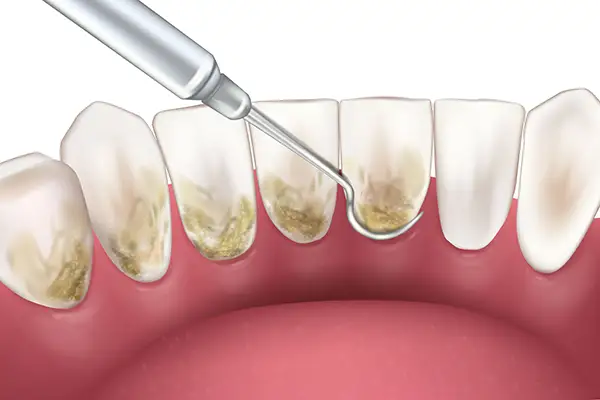 If your gums bleed when you brush, your breath stays bad no matter what you do, or your dentist has measured deep pockets around your teeth, Jerome Riddle DDS offers deep cleaning, also called scaling and root planing, in Phoenix, AZ. Deep cleaning is a non-surgical periodontal treatment that goes below the gumline to remove the hardened tartar, bacteria, and toxin-coated root surfaces that a routine cleaning cannot reach. If your gums bleed when you brush, your breath stays bad no matter what you do, or your dentist has measured deep pockets around your teeth, Jerome Riddle DDS offers deep cleaning, also called scaling and root planing, in Phoenix, AZ. Deep cleaning is a non-surgical periodontal treatment that goes below the gumline to remove the hardened tartar, bacteria, and toxin-coated root surfaces that a routine cleaning cannot reach.
This is the procedure your dentist recommends when a regular six-month cleaning is no longer enough. It is the foundation of periodontal care and the most reliable way to stop gum disease before it gets to the point of bone loss or tooth loss. Most patients notice the inflammation in their gums easing within days of the first visit.
If you have been putting this off because you aren’t sure whether you really need it, that’s a fair starting point. We measure your pockets, show you exactly where the disease is, and explain what is happening before we recommend anything.
On This Page
What Is Deep Cleaning, and How Is It Different From a Regular Cleaning?
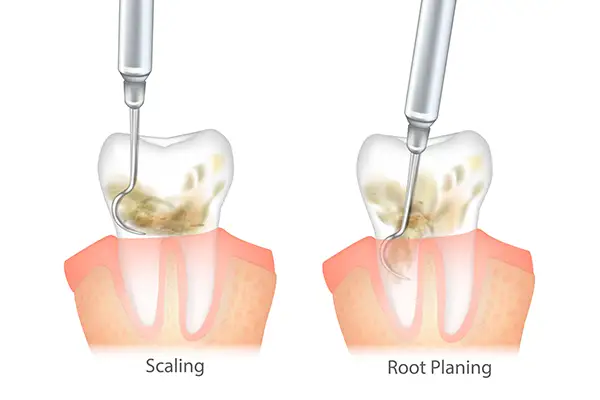 Scaling is the mechanical removal of tartar and bacterial colonies from the surface of the tooth and from the periodontal pocket below the gumline. Root planing comes next: we smooth the root surface itself, removing the bacterial toxins embedded in the cementum so the gums can heal back against a clean tooth. Together these two steps make up what most patients call a “deep cleaning.” Scaling is the mechanical removal of tartar and bacterial colonies from the surface of the tooth and from the periodontal pocket below the gumline. Root planing comes next: we smooth the root surface itself, removing the bacterial toxins embedded in the cementum so the gums can heal back against a clean tooth. Together these two steps make up what most patients call a “deep cleaning.”
The difference between this and a regular dental cleaning comes down to how far below the gumline the work goes. A routine prophy cleaning targets plaque and tartar above and just below the gumline on healthy gums. Scaling and root planing reaches into pockets that are 4 millimeters deep or greater, where the inflammation lives. Both procedures matter. They are not the same thing, and one does not replace the other.
How You Know You Need It
The decision is not a guess. Your hygienist measures the depth of every pocket around every tooth with a thin probe, marks where you bleed, and notes any recession. A few common signs that bring patients to this page:
| • |
Gums that bleed when brushing or flossing, or even when you eat
|
| • |
Persistent bad breath that does not respond to brushing, mouthwash, or regular flossing
|
| • |
Visible recession where your teeth look longer than they used to
|
| • |
Looseness or shifting of teeth that used to feel solid
|
| • |
Pocket depths of 4 millimeters or greater measured during your dental exam |
A bleeding-gums symptom on its own usually means early gum disease, and many patients first end up here through treatment for bleeding gums. The pocket depth measurement is what tells us whether scaling and root planing is the right next step or whether a more conservative approach will do.
Your Periodontal Care Team in Phoenix
Dr. Jerome Riddle has been practicing in the Phoenix and Scottsdale area for more than two decades. His bio page covers the full background, including his GPR residency at the UCLA and VA hospitals and the gentle, patient-paced approach he is known for. With perio work, the difference between a comfortable deep cleaning and a rough one is largely the operator, and that gentle technique is one of the reasons patients with significant dental anxiety still get through scaling and root planing comfortably at our office.
Our team also includes Dr. Eric Johnston, who graduated from Loma Linda University School of Dentistry in 2017 and has been blending the technical and artistic sides of dentistry since. More on his bio page.
Behind both doctors is a hygiene team that handles the bulk of the periodontal charting and the SRP itself. They take the time to walk you through your pocket-depth chart, point out exactly where the disease is active, and explain why we are recommending what we are recommending before any treatment begins.
Your Scaling and Root Planing Process, Step by Step
We almost always split scaling and root planing into two visits, treating one half of the mouth at each appointment. The reason is comfort. You stay numb on one side at a time and you can still chew on the other side that day, and each appointment stays at a manageable length.
Periodontal Evaluation and Charting
Before any cleaning happens, our hygienist measures the depth of each pocket, records bleeding points, and reviews your digital X-rays for signs of bone loss. This baseline tells us exactly where the disease is and gives us the comparison numbers for your reassessment visit later. We also use our Diagnodent laser during this exam to catch early decay on adjacent teeth, since perio patients often have caries forming in the same areas where bacteria are accumulating.
Numbing the Quadrant
We numb either the upper-right and lower-right side, or the upper-left and lower-left side, with local anesthesia before we begin. The quadrants stay numb for an hour or two, which is plenty of time for the work and lets you go about the rest of your day on the other side of your mouth.
Scaling Below the Gumline
Using ultrasonic and hand instruments, we remove the tartar and bacterial colonies from the tooth surfaces and from inside the pocket. The ultrasonic flushes the pocket with water as it works, which lifts out debris and reduces the bacterial load along with the visible buildup.
Root Planing the Tooth Surfaces
Once the tartar is gone, we smooth the cementum on the root itself. This step matters because rough root surfaces collect bacteria again quickly, and toxin-coated cementum keeps the gum from reattaching the way it should. Smooth, clean roots give your gums a surface they can heal against.
Second Visit and Reassessment
We treat the other half of the mouth at a second appointment, usually one to two weeks later. Six to eight weeks after that second visit, we re-measure your pocket depths to see how much your gums have responded. From there, we move you onto a periodontal maintenance schedule, typically every three to four months instead of every six. We also use our intraoral camera at maintenance visits to capture the same areas we documented at your initial evaluation, so you can see the progress on screen instead of just being told about it.
You can expect some sensitivity for several days after each visit, especially to cold and to acidic foods. This is normal, since the cementum we just smoothed is no longer covered by tartar. If the sensitivity persists past a week or two, we have several options for tooth sensitivity treatment that work well after SRP.
Benefits of Deep Cleaning for Patients With Gum Disease
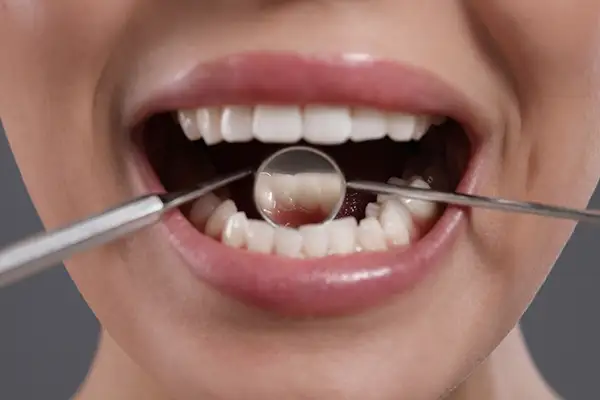 Scaling and root planing is the standard non-surgical treatment for active gum disease, and the benefits show up faster than most patients expect. Bleeding usually stops within one to two weeks. The constant bad-taste, sour-breath problem that drives a lot of patients to make this appointment in the first place tends to clear up almost immediately. At your reassessment visit, we re-measure the same pockets we charted at your initial evaluation, so the improvement is documented in numbers, not just felt. Scaling and root planing is the standard non-surgical treatment for active gum disease, and the benefits show up faster than most patients expect. Bleeding usually stops within one to two weeks. The constant bad-taste, sour-breath problem that drives a lot of patients to make this appointment in the first place tends to clear up almost immediately. At your reassessment visit, we re-measure the same pockets we charted at your initial evaluation, so the improvement is documented in numbers, not just felt.
The bigger reason this procedure matters is what it prevents. Untreated gum disease destroys the bone that holds your teeth in place. Once that bone is gone, it does not come back, and the only options are tooth replacement appliances or extraction. Stopping the cycle early is the difference between keeping your teeth and losing them.
The deeper benefits show up over months, not days:
- Pocket depths shrink – The 4 mm and 5 mm pockets we measured at your initial periodontal exam commonly drop to 3 mm or less by the reassessment visit six to eight weeks later.
- Bleeding resolves – Healthy gums do not bleed, so the absence of bleeding when you brush is a direct sign that the inflammation is gone.
- Bone loss stalls – The bacterial cycle that drives bone destruction stops, and your remaining bone stays where it is.
- Whole-body inflammation drops – Periodontal inflammation has been associated with cardiovascular and diabetic complications, and treating it removes one source of chronic inflammation.
For patients who have been told they need this and have been waiting, the part that surprises people most is how much better their gums feel within the first two weeks. Strong oral hygiene habits at home, combined with the periodontal maintenance schedule we set up after your reassessment visit, are what protect those gains long term.
Why Choose Our Phoenix Office for Scaling and Root Planing
At Jerome Riddle DDS, we approach scaling and root planing at a pace that lets you understand what is happening before any treatment begins. Dr. Riddle’s bio describes his approach as “patience and dedication using gentle, yet highly effective techniques,” and SRP is one of the procedures where that pacing makes the biggest difference. Our hygienist will pause whenever you need a break, and the visit runs at your comfort level rather than on a clock.
Our hygiene team takes the time to chart every pocket, show you the numbers on your own chart, and explain what each measurement means before any treatment begins. You will know exactly why we are recommending what we are recommending and what the alternative looks like if you wait. Conversations like this are harder to come by than they should be, and they are the reason most of our perio patients commit to the treatment plan instead of postponing.
We also use modern diagnostic technology to make sure nothing about your perio status is missed. Digital X-rays, intraoral camera imaging, and the Diagnodent laser all work together during the periodontal exam. The intraoral camera in particular lets us show you what your gums and teeth actually look like, on a screen, instead of just describing it. Patients tend to engage with their own care more once they have seen what we are seeing.
Deep Cleaning Cost and Insurance
Cost is a fair concern with any periodontal treatment. The cost of scaling and root planing depends on how many quadrants need treatment and the severity of the disease in each. Some patients only need two quadrants treated; others need all four. The fee structure follows the standard dental insurance codes for SRP per quadrant.
The good news is that most dental insurance plans cover scaling and root planing because it is a documented treatment for diagnosed gum disease, not a cosmetic procedure. Coverage typically pays a percentage of the per-quadrant fee, with frequency limits that apply to how often you can have it repeated. Our front office team verifies your specific benefits before treatment starts so you know what to expect. More on our insurance and financing options.
If insurance does not cover the full amount, payment plans are available. Call our office and we can give you a personalized estimate before you decide.
Schedule Your Deep Cleaning Consultation
Healthier gums start with the periodontal evaluation. Call Jerome Riddle DDS at 480-991-4410 or request an appointment online. We’re at 7010 E. Chauncey Ln. Suite #140 in Phoenix, AZ 85054. You can also contact us with any questions before booking.
Frequently Asked Questions
Is a deep cleaning painful?
No. The quadrant we’re working on is fully numb with local anesthesia, so the cleaning itself feels like pressure rather than pain. Our hygiene team in Phoenix is also experienced with patients who are nervous about the procedure, and the gentle technique Dr. Riddle is known for carries through to the hygiene side of the office. The part patients describe as uncomfortable is usually the next few days, when cold drinks and sometimes brushing produce a temporary sensitivity. That sensitivity typically settles within a week or two as the gums tighten back up against the roots.
How long does a scaling and root planing appointment take?
Each visit at our Phoenix office is typically 60 to 90 minutes, depending on how much tartar has built up and how deep the pockets are. We treat half the mouth at each visit, so the full SRP is two appointments. If your case is mild, the visits run shorter; if there is significant subgingival buildup or you have not had a cleaning in years, plan on the longer side.
Why do you split deep cleanings into two visits instead of one?
Two reasons, both about your comfort. Numbing all four quadrants at once means your entire mouth is numb for several hours, which makes eating and even drinking difficult for the rest of the day. And the appointment itself would run two to three hours straight, which is a lot for the jaw to stay open. Splitting into two visits keeps each one manageable and lets you eat normally on one side while the other side recovers.
How long until my gums actually heal?
Healing happens in stages. Bleeding stops first, usually within one to two weeks, because that is how fast inflammation resolves once the bacterial load drops. Tissue re-attachment to the cleaned root surfaces takes longer, roughly four to six weeks before the pocket reduction becomes measurable. By the eight-week mark, the gums often look visibly pinker and less swollen, and they no longer feel tender to brush. Subjectively, that is the point most patients describe as feeling “back to normal.”
Will I need to keep getting deep cleanings every year?
No, not the full SRP every time. Once your gums respond to the initial scaling and root planing, you switch to periodontal maintenance visits, which are usually every three to four months. Maintenance is a less involved cleaning that focuses on keeping the pockets shallow and the bacterial load low. The four-month cadence stays in place long term because gum disease is managed rather than cured.
Does dental insurance cover scaling and root planing?
Most dental plans cover SRP under codes D4341 (four or more teeth per quadrant) and D4342 (one to three teeth per quadrant), usually at a percentage of the in-network fee. Most plans also have a frequency limit, often once every 24 months per quadrant, before they will pay for it again. Our front office verifies your specific benefits and any frequency restrictions before treatment so there are no surprises. More on our insurance and financing options.
What happens if I do not get scaling and root planing when it is recommended?
The pockets get deeper, the bone supporting the teeth slowly recedes, and at some point the teeth start to feel loose. The progression is usually slow, measured in years rather than months, but it is not reversible once bone is lost. Patients who postpone often come back to us later having lost a tooth or two and ask whether SRP would have prevented that. Most of the time, the honest answer is yes.
Can I just get a regular cleaning instead of a deep cleaning?
Not if your pocket depths and bleeding put you in the diagnostic category for periodontitis. By the dental coding rules, a routine prophy is for patients with healthy gums; once disease is documented, the appropriate treatment is SRP. Skipping straight to a regular cleaning leaves the bacteria below the gumline untouched, which is the problem. If your symptoms are limited to bad breath and you do not have measured pockets, bad breath treatment may be a more direct fit.
|