Mercury-Free Dentistry
Phoenix & North Scottsdale
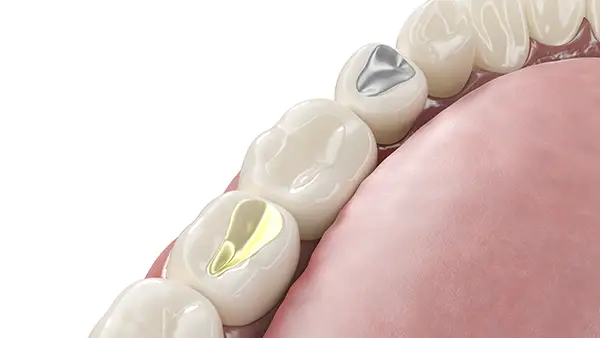 For patients in Phoenix, AZ who prefer mercury-free dentistry, Jerome Riddle DDS places only tooth-colored composite fillings and porcelain inlays and onlays, not amalgam (silver) fillings. If you have existing amalgams and want to know whether they should be replaced, or you simply want every new restoration done in modern materials, this page covers both. For patients in Phoenix, AZ who prefer mercury-free dentistry, Jerome Riddle DDS places only tooth-colored composite fillings and porcelain inlays and onlays, not amalgam (silver) fillings. If you have existing amalgams and want to know whether they should be replaced, or you simply want every new restoration done in modern materials, this page covers both.
Mercury-free is a positioning, not a procedure on its own. The actual work falls under the larger umbrella of restorative dentistry at our office, with the choice of material decided tooth by tooth based on the size of the cavity and how much sound tooth structure is left.
Our position is patient-preference-driven. The choice to place only mercury-free materials reflects what most of our patients ask for and the cosmetic-led standard the practice has built around. We are happy to talk through which approach fits your specific tooth, and we will not pressure you to replace existing amalgams that are functioning fine.
On This Page
What Is Mercury-Free Dentistry?
Mercury-free dentistry simply means a practice does not place amalgam fillings. Amalgam, sometimes called silver fillings, is a metal alloy that contains roughly 50 percent mercury along with silver, tin, and copper. It has been used in dentistry for more than 150 years and is considered safe by the FDA for most adults, but a growing number of patients prefer alternatives that bond to tooth structure and match the natural color of teeth.
We do not make health claims about amalgam, and we do not recommend that patients with existing, functional amalgam restorations have them replaced for safety reasons. The decision to switch from amalgam to tooth-colored materials is a personal one for most people, and we are happy to support either choice.
Should You Replace Your Existing Amalgam Fillings?
Most patients with stable amalgam fillings do not need to replace them. The American Dental Association and the FDA both consider amalgam safe for the general adult population, and removing fillings that are functioning well takes more tooth structure away each time. There are, however, several situations where replacement does make sense:
| • |
Failing fillings that are cracked, chipped, leaking, or have decay underneath
|
| • |
Fractured or fracturing teeth where the surrounding tooth wall is showing stress around the existing amalgam
|
| • |
Aesthetic concerns when amalgam shows in the smile zone, which is the most common reason patients ask
|
| • |
Personal preference, which is a completely valid reason on its own
|
| • |
Mercury allergy, which is rare but documented and a clear medical indication for replacement |
If your amalgams are intact and not causing problems, we will tell you that. The conversation is more useful when you know which of your fillings actually need attention and which ones do not.
Your Mercury-Free Care Team in Phoenix
Dr. Jerome Riddle has been placing tooth-colored restorations in the Phoenix and Scottsdale area for more than two decades, well into the era when composite materials surpassed amalgam in both aesthetics and bonding performance. His bio page covers his GPR residency at the UCLA and VA hospitals and the gentle approach he is known for chairside.
Dr. Eric Johnston works alongside Dr. Riddle and graduated from Loma Linda University School of Dentistry in 2017. He learned restorative dentistry in the modern era, where composite resin and porcelain are the default materials and amalgam is rarely placed in dental school clinics anymore. More on his bio page.
Your Tooth-Colored Treatment Options
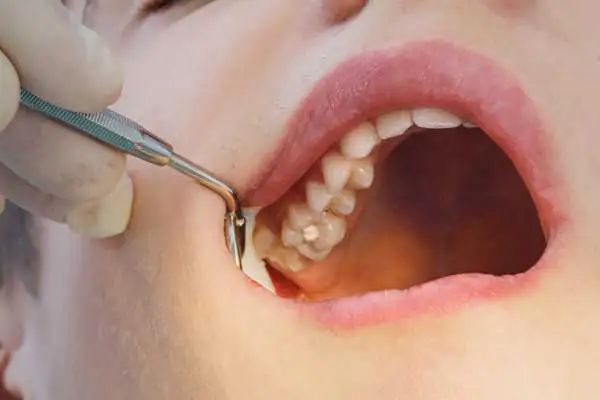 At our Phoenix office, every cavity that would historically have been filled with amalgam is now restored with one of three approaches. The right choice depends on the size of the cavity, where the tooth sits in your bite, and how much sound tooth structure remains around the restoration. At our Phoenix office, every cavity that would historically have been filled with amalgam is now restored with one of three approaches. The right choice depends on the size of the cavity, where the tooth sits in your bite, and how much sound tooth structure remains around the restoration.
Composite Fillings
The workhorse restoration in our office. Composite fillings go in during a single visit, bond directly to the prepared tooth, and color-match the surrounding enamel. They are the appropriate choice for small to medium cavities and for replacing existing amalgams when the tooth structure is intact enough to accept a direct restoration.
Porcelain Inlays and Onlays
For larger restorations, where a composite filling would not have enough surrounding tooth to bond to reliably, we use porcelain inlays and onlays. These are custom-made to fit into or over the prepared tooth, then bonded in place at a follow-up visit. They are stronger than composite over a larger surface area and last longer in heavy-load areas like molars.
Dental Bonding for Smaller Repairs
For chipped front teeth, small surface defects, or cosmetic edge repairs, we use dental bonding. Same material family as composite filling, applied to the front of the tooth rather than into a cavity. Bonding addresses the aesthetic concern that often prompts a patient to ask about mercury-free in the first place.
Replacing an Existing Amalgam
When you choose to have an amalgam replaced, the visit is similar to placing any new filling. We numb the area, carefully remove the amalgam, evaluate the tooth structure underneath, and place either a composite filling or schedule a follow-up for an inlay or onlay if the tooth needs more support. We use high-volume suction throughout the removal to manage the metal particles that come off as the old filling is taken out, and we work in conservative quadrants rather than removing many old fillings at once.
Benefits of Tooth-Colored Fillings
 The reasons patients give for wanting mercury-free fillings start with appearance and end with function. Both matter. The reasons patients give for wanting mercury-free fillings start with appearance and end with function. Both matter.
The aesthetic benefit is the most obvious. Composite resin is shaded to match the existing tooth, so the restoration is essentially invisible once it is in place. We document the match with our intraoral camera before and after each filling, and patients who have had amalgams in molars for years are often surprised at how the back of their smile looks once those silver patches are gone.
The functional benefits are less visible but more important over the life of the tooth:
- Bonding to tooth structure – Composite resin bonds chemically to the prepared tooth, where amalgam relies on mechanical undercuts. The bond means we can preserve more of the natural tooth during preparation.
- No thermal expansion stress – Amalgam expands and contracts with hot and cold cycles, which can fatigue surrounding tooth structure over time. Composite and porcelain do not.
- Less prep needed – Because composite bonds, we can use a more conservative cavity preparation. The smaller the prep, the more original tooth is left to support the long-term restoration.
- Easier to repair – A small chip in a composite restoration can often be added to and re-bonded; amalgam typically requires full removal and replacement.
For patients who care primarily about how their teeth look, composite or porcelain almost always wins on appearance. For patients who care primarily about how the tooth holds up over a decade, the conservative bonding philosophy we use at our Phoenix office is the bigger long-term advantage.
Why Choose Our Phoenix Office for Mercury-Free Care
Jerome Riddle DDS has been a mercury-free office for years, and the choice runs through everything from the materials we stock to the curing lights and bonding agents we use chairside. We do not keep amalgam capsules on hand, so the decision has been made before you walk in.
Our equipment is oriented around composite and porcelain. The intraoral camera, digital X-ray, and Diagnodent caries detection laser at our Phoenix office all support the conservative cavity preparation that bonded restorations work best with. Catching a cavity at 1 mm rather than 4 mm means a smaller composite and a stronger long-term bond.
Beyond the technical side, the practice positions itself in the cosmetic dentistry space, and that affects how we approach restorative work. The same eye for color matching and contour that goes into a veneer goes into a posterior composite filling. The molars at the back of your smile will not be invisible, but they should look like teeth, not like amalgam patches.
Mercury-Free Dentistry Cost and Insurance
Cost is a fair concern. Composite fillings typically cost more than amalgam fillings, often by 10 to 20 percent per surface, because the material itself is more expensive and the placement technique requires more time and isolation. Porcelain inlays and onlays cost meaningfully more than direct fillings because they involve a custom-fabricated restoration and a second appointment.
The good news for new fillings is that most dental insurance plans now cover composite fillings on both front and back teeth at the same percentage as amalgam. A small number of older plans pay only the amalgam-equivalent rate for posterior composites, leaving a small material-upgrade co-pay difference. For replacing existing functional amalgams, insurance typically does not contribute, since the existing filling is not failing. We verify your specific coverage before scheduling any work. More on our insurance and financing options.
If you are replacing existing amalgams primarily for aesthetic reasons, payment plans are available. We give you a clear per-tooth estimate before you decide, so the choice is grounded in real numbers rather than abstract concern.
Schedule Your Mercury-Free Consultation
Whether you are choosing a new dentist with mercury-free as a priority or weighing whether to replace existing amalgams, the place to start is a consultation. Call Jerome Riddle DDS at 480-991-4410 or request an appointment online. We’re at 7010 E. Chauncey Ln. Suite #140 in Phoenix, AZ 85054. You can also contact us with any questions before booking.
Frequently Asked Questions
Are amalgam (mercury) fillings dangerous?
The FDA and the American Dental Association both consider amalgam fillings safe for most adults. In 2020, the FDA updated its guidance to recommend that certain groups consider alternatives where possible: pregnant or nursing women, children under six, people with neurological or kidney disease, and people with mercury sensitivity. For everyone outside those groups, the FDA position is that amalgam is safe and that removing existing functional amalgams is not medically necessary. We approach the conversation as a patient preference rather than a medical recommendation, and we do not push patients in either direction.
Should I replace amalgam fillings that are not causing problems?
For most stable amalgam fillings, the answer is no. Replacing a functional filling removes more healthy tooth structure and creates a new restoration that itself will eventually need replacing. We replace amalgams that are failing, fracturing, or visible in the smile zone, and we leave intact ones alone unless you specifically ask us to change them. The thing patients sometimes do not realize is that every replacement cycle takes a little more tooth, so leaving a working filling in place is often the better long-term choice.
Are composite fillings as durable as amalgam?
Modern composite fillings on posterior teeth typically last 7 to 10 years, compared to 10 to 15 years for amalgam in similar locations. Porcelain inlays and onlays last 15 years or more in most patients. The durability gap has closed significantly over the past 20 years as bonding agents and composite resins have improved, though amalgam still holds a slight edge in pure longevity for very large posterior restorations. For most cavities under moderate size, the difference in expected lifespan is not the deciding factor.
Will insurance cover composite fillings the same as amalgam?
Most dental insurance plans now cover composite fillings on both front and back teeth at the same percentage as amalgam. A small number of older plans pay only the amalgam-equivalent rate for posterior composites, leaving a small material-upgrade co-pay per filling. We verify your specific plan before any new fillings are scheduled, so any out-of-pocket difference is known up front. More on our insurance and financing options.
How long do tooth-colored fillings last?
A well-placed composite filling on a posterior tooth lasts 7 to 10 years on average, sometimes longer with strong home care. Composite fillings on front teeth often last longer because they do not take the same chewing load. Porcelain inlays and onlays last 15 years or more in most patients. The biggest factors in longevity are the size of the restoration, the bite force on the tooth, and whether you grind at night.
Will the new composite filling match my tooth color exactly?
In most cases, yes. We shade-match the composite to your specific tooth before placement, blending across the natural variations of your enamel. Once the filling is polished, it is essentially invisible to anyone other than another dentist looking for it specifically. The match is most precise on front teeth where appearance matters most, and we will adjust the shade selection if your teeth have been recently whitened or if a darker tooth needs to look lighter than the source enamel.
Can I have all of my old amalgam fillings replaced in one appointment?
Technically yes, but we generally do not recommend it. Replacing many amalgams at once means several hours of numbness and a long appointment, both of which become uncomfortable. Working through one or two quadrants at a time also lets us evaluate how each tooth holds up under chewing load before we commit to the next round, which sometimes changes whether a tooth ends up with a composite or an inlay. Most patients in this position spread the work over two to four visits.
What happens if there is decay underneath an old amalgam filling?
We see this often. Old amalgam fillings can develop microscopic gaps at the edges that allow bacteria to enter and decay to develop underneath without showing on the surface. If we find decay during a replacement, we clean the cavity completely before placing the new restoration. In some cases, what was originally a small cavity has grown large enough to need an inlay or onlay rather than a direct filling, and we walk you through the options before continuing. This is one reason we evaluate each tooth carefully during removal rather than committing to a specific replacement plan up front.
|