Root Canal Retreatment
Phoenix & North Scottsdale
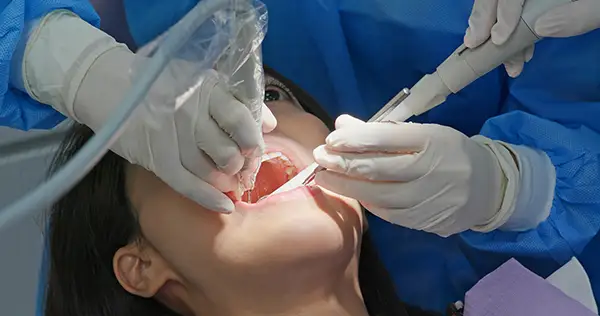 If a previously treated tooth is causing you discomfort or showing signs of reinfection, root canal retreatment in Phoenix, AZ, at Jerome Riddle DDS can help save your tooth and restore your comfort. Root canal retreatment is a specialized procedure that revisits a tooth that has already undergone root canal therapy, addressing new or persistent infection so you can avoid extraction and keep your natural smile intact. If a previously treated tooth is causing you discomfort or showing signs of reinfection, root canal retreatment in Phoenix, AZ, at Jerome Riddle DDS can help save your tooth and restore your comfort. Root canal retreatment is a specialized procedure that revisits a tooth that has already undergone root canal therapy, addressing new or persistent infection so you can avoid extraction and keep your natural smile intact.
Many patients are surprised to learn that a tooth treated with a root canal can sometimes develop problems months or even years after the original treatment. When that happens, retreatment offers a reliable path forward. Our team has experience identifying the cause of the issue and developing a plan to resolve it thoroughly. We also provide a full range of restorative dentistry services to support every stage of your care.
On this page, you’ll find detailed information about what root canal retreatment involves, who may need it, what the process looks like, and how our Phoenix dental team can help you feel confident about your next steps.
On This Page
What Is Root Canal Retreatment?
 Root canal retreatment is a procedure that reopens a tooth previously treated with root canal therapy to clean, disinfect, and reseal the internal canals. The goal is to eliminate infection or inflammation that has returned after the original treatment and to give the tooth the best possible chance of long-term survival. Root canal retreatment is a procedure that reopens a tooth previously treated with root canal therapy to clean, disinfect, and reseal the internal canals. The goal is to eliminate infection or inflammation that has returned after the original treatment and to give the tooth the best possible chance of long-term survival.
A standard root canal has a high success rate, but in some cases the tooth does not heal as expected. Bacteria can re-enter the canals through a new crack, a delayed crown placement, or canal anatomy that was difficult to fully access during the first treatment. When infection returns, retreatment allows our team to address the problem directly rather than lose the tooth altogether.
Why Would a Root Canal Need Retreatment?
Several factors can contribute to the need for retreatment. Narrow or curved canals that were not fully cleaned during the initial procedure may still harbor bacteria. A crown or filling that was not placed promptly after the original root canal can allow saliva and bacteria to re-enter the tooth. New decay on the treated tooth can also expose the root canal filling material to contamination. In some cases, a crack or fracture develops in the tooth over time, creating a pathway for reinfection. If you are experiencing symptoms such as lingering sensitivity, swelling near the treated tooth, or a recurring tooth infection, our team can evaluate whether retreatment is the right course of action.
Is Root Canal Retreatment Right for You?
You may be a candidate for retreatment if you have a previously treated tooth that is causing renewed discomfort, swelling, or drainage. A thorough evaluation including dental imaging helps our team determine whether the tooth can be successfully retreated or whether an alternative approach is needed. In most cases, retreatment is preferable to extraction because it preserves your natural tooth structure and avoids the need for a replacement such as a bridge or implant. Patients in the Phoenix area who are unsure whether their symptoms warrant retreatment are encouraged to schedule a dental exam so we can assess the situation and discuss your options.
Your Dental Team in Phoenix
Dr. Jerome Riddle practices a full scope of general and cosmetic dentistry at Jerome Riddle DDS, with expertise that spans a wide range of restorative and cosmetic treatments. He and his staff are dedicated to providing a pleasant visit and results you can feel proud of. When it comes to root canal retreatment, Dr. Riddle takes the time to evaluate each case carefully and explain every step of the process so you feel informed and comfortable.
Dr. Eric Johnston brings a passion for blending the art, science, and technical aspects of dentistry to every patient interaction. A graduate of Loma Linda University School of Dentistry, Dr. Johnston strives to treat every patient’s dental needs as he would treat his own family. His commitment to learning new techniques and implementing new procedures ensures that patients receive care that reflects the most current standards. To learn more about our doctors and their approach, visit our About Us page.
Your Root Canal Retreatment, Step by Step
Knowing what to expect at each stage of retreatment can help ease any concerns you may have. Here is how the process typically works at our Phoenix office.
Evaluation and Imaging
Your retreatment begins with a comprehensive examination of the affected tooth. Our team takes updated X-rays to evaluate the internal structure, check for signs of infection, and assess the condition of the previous root canal filling material. We use our advanced dental technology to get a clear picture of what is happening inside the tooth so we can plan your treatment with precision.
Accessing the Canals
To reach the interior of the tooth, our team carefully removes the existing crown or restoration. In some cases, a post that was placed during the original treatment also needs to be removed. Once the canals are accessible, the previous filling material is taken out so the full length of each canal can be examined and cleaned.
Cleaning and Disinfection
With the canals open, our team meticulously cleans and shapes them using specialized instruments. This step removes any remaining bacteria, infected tissue, or debris that may be contributing to the problem. Each canal is thoroughly disinfected to create the best environment for healing.
Resealing and Restoration
After the canals have been cleaned and disinfected, they are filled with a biocompatible material and sealed to prevent future contamination. A temporary filling is placed, and you will return for a permanent restoration – typically a dental crown – to protect the tooth and restore its full function. The entire retreatment process usually takes one to two appointments, and most patients report that the experience is comparable to the original root canal.
Benefits of Root Canal Retreatment
 Choosing retreatment over extraction offers several meaningful advantages for both your oral health and your quality of life. Our team recommends retreatment whenever the tooth has a good chance of long-term success because preserving your natural tooth is almost always the better option. Choosing retreatment over extraction offers several meaningful advantages for both your oral health and your quality of life. Our team recommends retreatment whenever the tooth has a good chance of long-term success because preserving your natural tooth is almost always the better option.
Keeping your natural tooth means you maintain the bone structure and support that surrounds it. When a tooth is extracted, the surrounding bone begins to deteriorate over time, which can affect neighboring teeth and change the shape of your jaw. Retreatment helps you avoid that chain of consequences by addressing the infection and allowing the tooth to remain in place.
- Preserves Your Natural Tooth – Retreatment allows you to keep the tooth you were born with, avoiding the need for an artificial replacement.
- More Affordable Than Replacement – Saving an existing tooth through retreatment is typically less costly than extracting it and placing a bridge or implant.
- Maintains Your Bite and Alignment – A natural tooth in its original position supports proper chewing function and prevents neighboring teeth from shifting.
- Proven Long-Term Results – When performed thoroughly, retreatment has a strong success rate and can allow the tooth to function comfortably for many years.
For patients who have been living with recurring discomfort in a previously treated tooth, retreatment often provides the lasting relief they have been hoping for.
Why Choose Our Team for Root Canal Retreatment
At Jerome Riddle DDS, we approach every retreatment case with the thoroughness and attention it deserves. Root canal retreatment can be more complex than an initial root canal because the previous filling material must be carefully removed and the canals must be re-evaluated from scratch. Our team has the experience, patience, and technology to handle these cases with confidence.
We invest in modern equipment and stay current with the latest techniques so that your retreatment is as efficient and comfortable as possible. From the initial imaging to the final restoration, every step is guided by a commitment to precision and patient-centered care. We also take the time to explain your diagnosis, answer your questions, and make sure you understand your options before we begin.
Our Phoenix office serves patients throughout the surrounding area, and we regularly work with patients who have been told they need retreatment but feel uncertain about the process. We take pride in helping those patients feel informed and cared for from start to finish.
Root Canal Retreatment Cost and Financing
We understand that cost is an important factor when considering any dental treatment. The investment for root canal retreatment depends on several variables, including which tooth is being treated, the complexity of the previous root canal, and whether a new crown or other restoration is needed afterward.
Our front office team will work with you to provide a clear estimate of your costs before treatment begins. Many dental insurance plans cover a portion of retreatment, and we encourage you to contact us so we can verify your specific benefits. For additional details on accepted plans and payment options, visit our financial and insurance page.
We also offer flexible financing options to help make treatment accessible. Our team believes that financial concerns should not prevent you from saving a tooth that can be preserved. Call 480-991-4410 to discuss your situation and learn about the payment arrangements available to you.
Schedule Your Root Canal Retreatment Consultation
If you suspect a previously treated tooth may need attention, the best next step is a thorough evaluation. Contact Jerome Riddle DDS today at 480-991-4410 to schedule your root canal retreatment consultation at our Phoenix, AZ office located at 7010 E. Chauncey Ln. Suite #140, Phoenix, AZ 85054. Our team is ready to assess your situation, explain your options, and help you move forward with confidence. Visit our homepage to learn more about our practice and the care we provide.
Frequently Asked Questions
What is root canal retreatment?
Root canal retreatment is a procedure that reopens a previously treated tooth to remove the old filling material, reclean the canals, and reseal them. It is performed when the original root canal has not healed properly or when new infection has developed inside the tooth.
How do I know if I need root canal retreatment?
Common signs include renewed sensitivity or discomfort in a tooth that previously had a root canal, swelling near the tooth, or drainage around the area. If you notice any of these symptoms, schedule an evaluation so our team can determine whether retreatment is needed.
Is root canal retreatment painful?
Most patients find retreatment to be comparable in comfort to the original root canal. We use local anesthesia to ensure you remain comfortable throughout the procedure, and any mild tenderness afterward typically resolves within a few days.
How long does root canal retreatment take?
Retreatment typically requires one to two appointments. The first visit focuses on removing the previous filling material, cleaning the canals, and placing medication. A follow-up visit is usually needed to permanently seal the canals and place the final restoration.
What happens if retreatment is not an option?
If retreatment is not viable due to a fracture, severe structural damage, or other complications, our team will discuss alternative options with you. These may include an apicoectomy, which is a minor surgical procedure on the root tip, or a tooth extraction followed by a replacement such as a bridge or implant.
Does dental insurance cover root canal retreatment?
Many dental insurance plans cover a portion of root canal retreatment, though coverage varies by plan. Our front office team at Jerome Riddle DDS can help verify your benefits and provide a cost estimate before treatment begins. Visit our financial and insurance page for more details.
How successful is root canal retreatment?
Root canal retreatment has a strong success rate when the tooth is structurally sound and the infection is fully addressed. With proper restoration and good oral hygiene, a retreated tooth can function comfortably for many years. Our team evaluates each case individually to give you a realistic outlook.
Will I need a new crown after retreatment?
In most cases, yes. The existing crown or restoration must be removed to access the canals, and a new dental crown is typically placed afterward to protect the tooth and restore its strength. Our team will discuss the restoration plan with you before retreatment begins.
|