Snoring Treatment in Phoenix & North Scottsdale, AZ
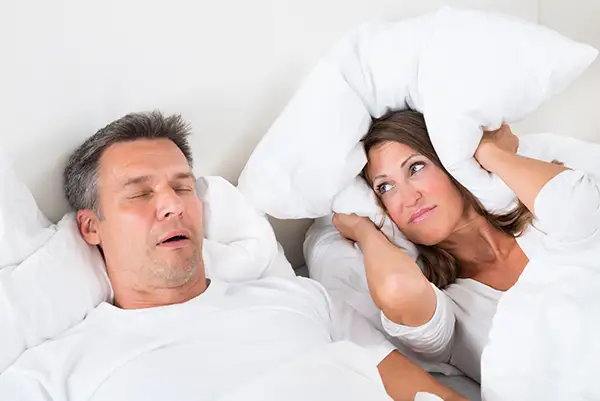 Snoring treatment in Phoenix and North Scottsdale, AZ at Jerome Riddle DDS uses a custom oral appliance that holds your lower jaw slightly forward while you sleep, giving air more room to move and making for quieter nights. It’s an option for primary snoring, for mild to moderate obstructive sleep apnea, and for people with a sleep apnea diagnosis who can’t tolerate CPAP. Snoring treatment in Phoenix and North Scottsdale, AZ at Jerome Riddle DDS uses a custom oral appliance that holds your lower jaw slightly forward while you sleep, giving air more room to move and making for quieter nights. It’s an option for primary snoring, for mild to moderate obstructive sleep apnea, and for people with a sleep apnea diagnosis who can’t tolerate CPAP.
One thing first: loud snoring can be a sign of sleep apnea, and only a physician can diagnose that. Our role is to screen for warning signs, point you to a sleep physician for testing, and then make and fine-tune your appliance.
If you’ve already been diagnosed, our sleep apnea treatment covers oral appliance therapy for diagnosed sleep apnea in more detail.
On This Page
Why Dentists Treat Snoring
Snoring happens when relaxed tissues in the throat vibrate as air squeezes through a narrowed airway. An oral appliance, often called a mandibular advancement device, fits over your upper and lower teeth and brings your jaw and tongue forward to keep the airway more open.
A 2015 clinical practice guideline from the American Academy of Sleep Medicine and the American Academy of Dental Sleep Medicine recommends that sleep physicians prescribe oral appliances, rather than no therapy, for adults who want treatment for primary snoring, typically after simpler steps like weight loss, side sleeping, and avoiding alcohol haven’t helped. For sleep apnea, the same 2015 AASM and AADSM guideline suggests a custom, titratable appliance over non-custom devices.
Primary Snoring vs. Sleep Apnea
Primary snoring is noise without repeated breathing pauses. Obstructive sleep apnea is different: the airway repeatedly narrows or closes, breathing drops or stops, and sleep gets broken up.
Warning signs include gasping or choking at night, pauses your partner notices, and heavy daytime sleepiness. Because snoring so often comes with sleep apnea, the guideline says primary snoring should be diagnosed by a sleep physician, not a dentist, using a home or in-lab sleep study the physician orders. If you live in Phoenix or North Scottsdale and haven’t been tested, that’s the step we’ll help you take first.
Is an Oral Appliance Right for You?
An appliance may be a good fit if one of these describes you:
| • |
Primary snoring - A physician has ruled out sleep apnea, and simpler steps haven’t quieted things down.
|
| • |
Mild to moderate sleep apnea - Your physician recommends an oral appliance.
|
| • |
CPAP intolerance - You have a diagnosis but can’t make CPAP work, and your physician agrees an appliance is worth trying.
|
| • |
Healthy teeth and gums - The appliance anchors on your teeth, so they need to be stable enough to hold it. |
For severe sleep apnea, CPAP generally stays the first-line treatment, and that call belongs to your physician.
Your Snoring Treatment Dentists in Phoenix & North Scottsdale
Dr. Jerome Riddle completed a general practice residency at UCLA and VA hospitals after dental school at USC, and he’s practiced in the Scottsdale area for more than 20 years. He reviews each patient’s medical history before recommending treatment, which matters when a dental appliance is part of a plan your physician is also managing.
Dr. Eric Johnston grew up in Tennessee, earned a biology degree in Chattanooga, and graduated from Loma Linda University School of Dentistry in 2017. He enjoys learning new techniques, which suits appliance therapy, where small adjustments over several weeks decide how well the appliance works for you.
The Oral Appliance Fitting Process
Plan on several weeks from screening to a fully adjusted appliance, depending mostly on how quickly your sleep testing happens.
Step 1: Risk Screening (At Your Dental Visit)
We ask about snoring, daytime sleepiness, and what your partner hears at night, and we look at your airway, tongue, and bite. The American Dental Association’s 2017 policy encourages dentists to screen for sleep-related breathing problems and refer people at risk to a physician, and that’s how we handle it.
Step 2: Physician Diagnosis (Timing Varies)
If you haven’t had a sleep study, we refer you to a physician, who decides between home and in-lab testing. If an appliance fits your diagnosis, the physician prescribes it.
Step 3: Impressions and Custom Fabrication
We take impressions of your teeth, digitally with our intraoral camera when that works for your case, and record your bite. A dental lab then builds an appliance shaped to your teeth.
Step 4: Fitting and Titration (First Several Weeks)
We fit the appliance, check comfort, and show you how to wear and clean it. Then we move it forward in small steps, often a fraction of a millimeter at a time, until snoring quiets with the least jaw movement needed. Our 7 a.m. starts on Wednesdays and Thursdays make these quick adjustment visits easier to fit in before work.
Step 5: Ongoing Follow-Up (Every Six Months, Then Yearly)
We check the fit and your bite about every six months in the first year, then at least once a year after that. If you have sleep apnea, your physician may order a follow-up sleep test to confirm the appliance is doing its job.
Benefits and Possible Side Effects
The biggest change often shows up at home, where whoever shares your room finally gets an uninterrupted night.
- Quieter nights – Better sleep for you and the person next to you.
- No mask or hose – Just a slim appliance over your teeth.
- Travel-friendly – No power source or machine to pack.
- Adjustable – We fine-tune the position as your needs change.
- Your physician stays involved – When sleep apnea is part of the picture, follow-up testing confirms the appliance is working.
There are trade-offs. Morning jaw soreness, extra saliva, and dry mouth are common early on, and morning soreness typically fades as the day goes on. Over years, bite changes are possible: an American Academy of Dental Sleep Medicine consensus paper notes that as many as 85% of people who use an appliance for more than five years show some change in how their teeth meet, so we check your bite at every follow-up visit.
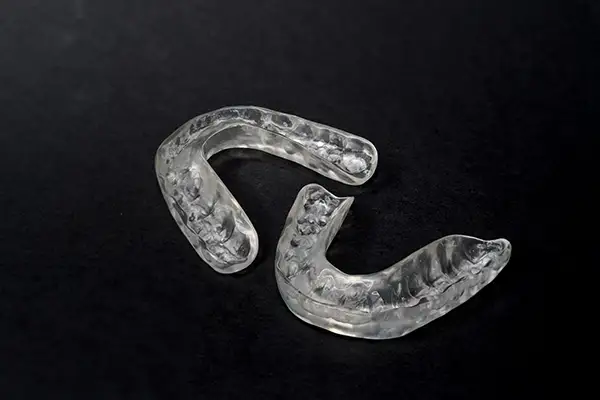 If you also clench or grind, a snoring appliance isn’t the same as a custom night guard, which protects teeth but doesn’t reposition the jaw. We’ll talk about whether teeth grinding treatment or TMJ-TMD treatment belongs in your plan too. If you also clench or grind, a snoring appliance isn’t the same as a custom night guard, which protects teeth but doesn’t reposition the jaw. We’ll talk about whether teeth grinding treatment or TMJ-TMD treatment belongs in your plan too.
Why Choose Our Office for Snoring Treatment
We keep the roles clear: your physician diagnoses, and we handle the appliance, its fit, and the health of your teeth along the way. That means no guesswork about whether your snoring is “just snoring.”
Because we provide general and family dentistry, we can watch your teeth, gums, and bite at the same visits where we adjust your appliance, and that’s where most appliance side effects show up. Our office is on E. Chauncey Lane at the Phoenix and North Scottsdale border.
Snoring Treatment Cost and Insurance
The cost of snoring treatment depends on the appliance design, lab fees, the number of adjustment visits, and whether you’re being treated for primary snoring or diagnosed sleep apnea.
Coverage varies a lot. Some medical plans help with oral appliances for diagnosed sleep apnea, while snoring alone often isn’t covered. Our team can check your Aetna, Cigna, Delta Dental, or MetLife dental benefits and walk you through our financial policy before treatment starts.
Call 480-991-4410 and we’ll put your estimate together.
Schedule Your Snoring Treatment Visit
Ready for quieter nights? Call 480-991-4410 or request an appointment online. We’re at 7010 E. Chauncey Ln. Suite #140, Phoenix, AZ 85054-3111. Questions about sleep testing first? Contact our office and we’ll walk you through it.
Frequently Asked Questions
Can you tell me whether I have sleep apnea?
No. We can spot risk factors during a routine dental exam and recommend testing, but the diagnosis has to come from a physician. Nasal strips and over-the-counter snoring products may quiet the noise but don’t treat sleep apnea, which is one more reason to get tested before treating snoring on your own.
Will an oral appliance replace my CPAP?
Not without your physician’s okay. The ADA’s 2017 policy describes oral appliances as appropriate for mild and moderate sleep apnea, and for severe sleep apnea only when CPAP isn’t tolerated. Keep using your CPAP until your physician tells you otherwise.
Are store-bought anti-snoring mouthguards the same thing?
No. Boil-and-bite devices are mostly prefabricated and often fit loosely, which can strain your jaw. In the research behind the 2015 guideline, custom appliances reduced sleep apnea events more than non-custom devices.
How long does it take to get used to wearing an appliance?
Most people settle in within the first few weeks. Extra saliva usually eases during that time, while dry mouth can linger for some people; keeping water by the bed helps.
What if the appliance doesn’t stop my snoring?
We can keep advancing it in small steps within a comfortable range. If snoring continues after that, it’s a reason to check back with your physician, since persistent snoring can point to sleep apnea that needs a different approach.
Can I get an appliance if I have crowns or missing teeth?
Usually, as long as enough healthy teeth remain to hold it securely. Crowns and bridges generally aren’t a problem, though we check them closely because appliance pressure can occasionally chip a restoration. If several teeth are missing, replacing them with a dental bridge or partial denture may need to come first.
|