Teeth Grinding Treatment (Bruxism)
Phoenix & North Scottsdale
 If you wake up with a sore jaw, tension headaches, or your dentist has noticed flat-worn or chipped teeth, you may be dealing with bruxism. Jerome Riddle DDS treats teeth grinding and clenching in Phoenix, AZ. Bruxism is the clinical name for the involuntary grinding or clenching of teeth, and most of it happens during sleep when patients have no conscious control over it. If you wake up with a sore jaw, tension headaches, or your dentist has noticed flat-worn or chipped teeth, you may be dealing with bruxism. Jerome Riddle DDS treats teeth grinding and clenching in Phoenix, AZ. Bruxism is the clinical name for the involuntary grinding or clenching of teeth, and most of it happens during sleep when patients have no conscious control over it.
Bruxism is managed rather than cured, so the goal of treatment is to protect your teeth and jaw from the cumulative damage that grinding causes. Sustained grinding is also one of the major drivers of TMJ disorder, so the two conditions are often managed in tandem.
Many patients first hear about bruxism during a routine dental exam, when we notice the wear patterns on their teeth before they have noticed the symptoms themselves. If that has just happened to you, this page should help you decide what to do next.
On This Page
What Is Bruxism?
Bruxism is involuntary teeth grinding or clenching. It comes in two forms: awake bruxism, where you clench during the day under stress or concentration, and sleep bruxism, where you grind during sleep. Sleep bruxism is more common and more damaging because the forces involved are higher and you cannot consciously stop it.
The clenching forces during sleep bruxism can be three to ten times stronger than normal chewing forces, which is why bruxism damages teeth, fillings, crowns, and the jaw joint over time. Most patients are not aware of the strength of their own grinding until a dentist points out the wear it leaves behind.
Common Symptoms of Teeth Grinding
Most patients do not know they grind. The diagnosis often starts with a sleep partner who hears the grinding at night, or with a dentist noticing the wear during a routine exam. Common signs include:
| • |
Jaw soreness on waking, sometimes with limited opening for the first hour
|
| • |
Tension headaches, especially in the temples, that fade through the morning
|
| • |
Visible wear or flattening on the chewing surfaces of teeth
|
| • |
Chipped or fractured teeth without an obvious cause
|
| • |
Cracked or leaking restorations, including older fillings and crowns
|
| • |
Tooth sensitivity to cold or pressure that does not match a specific cavity
|
| • |
Cheek-line indentation or scalloped edges on the sides of the tongue |
None of these symptoms on its own confirms bruxism, but several together usually does. The next step is a clinical exam to look at the wear patterns and palpate the chewing muscles for tenderness.
Common Causes
Bruxism is multifactorial. The most common contributing factors are:
| • |
Stress and anxiety, especially during awake clenching
|
| • |
Sleep-disordered breathing or sleep apnea, now understood as a major driver of sleep bruxism
|
| • |
Malocclusion, where the teeth do not fit together evenly
|
| • |
Certain medications, including some SSRIs and stimulants
|
| • |
Caffeine, alcohol, or recreational drugs that affect sleep architecture
|
| • |
Genetics, since bruxism does run in families |
Identifying the contributing factor matters because it changes the treatment plan. Stress-driven awake clenching responds to different strategies than sleep bruxism that may involve obstructive sleep apnea. If we suspect a sleep-breathing component, we coordinate with your physician for a sleep study.
Your Bruxism Care Team in Phoenix
Dr. Jerome Riddle has been diagnosing and managing bruxism in the Phoenix and Scottsdale area for more than two decades. His bio page covers his GPR residency at the UCLA and VA hospitals and the gentle approach he is known for chairside. With bruxism in particular, that careful approach matters at the diagnosis stage. Many patients have been told they "just need a night guard" without anyone first looking at why they are grinding, and that conversation is the one that often changes the treatment plan.
Dr. Eric Johnston works alongside Dr. Riddle and graduated from Loma Linda University School of Dentistry in 2017. More on his bio page.
Treatment Options for Teeth Grinding
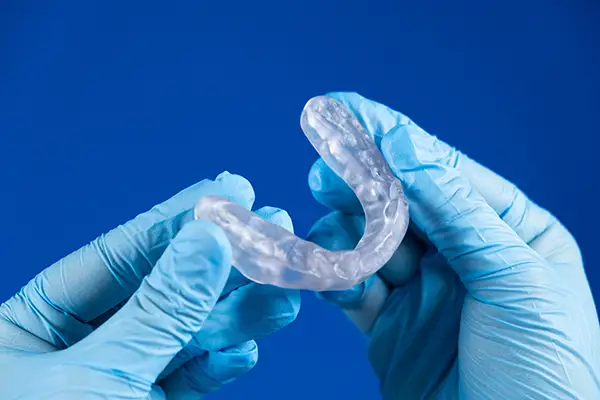 Bruxism management starts with a clinical exam, a conversation about the wear pattern we are seeing on your teeth, and a discussion about which treatment makes the most sense for your specific picture. We work through the options below in order from least invasive to most. Bruxism management starts with a clinical exam, a conversation about the wear pattern we are seeing on your teeth, and a discussion about which treatment makes the most sense for your specific picture. We work through the options below in order from least invasive to most.
Custom Night Guard
The most common starting point is a custom-fitted night guard worn during sleep. The guard does not stop the grinding, since most patients still grind into the appliance. What it does is absorb the forces that would otherwise wear down your teeth and reduce the muscular load that drives morning soreness. Custom guards from a dental impression fit better, last longer, and are far more comfortable to sleep in than over-the-counter boil-and-bite versions.
Lifestyle and Habit Changes
For awake bruxism, where you are clenching during the day in front of a screen or in traffic, behavioral awareness is part of the treatment. We often suggest setting a phone reminder a few times a day during the first month, just to check whether your jaw is clenched. The cue we want at rest is "lips together, teeth apart, tongue at the roof of the mouth." Reducing afternoon caffeine and managing the underlying stress source matter more than any product you can buy.
Occlusal Evaluation
If the wear pattern suggests your teeth are not coming together evenly, we evaluate the bite carefully. Sometimes a small occlusal adjustment, where we polish a high spot on a single tooth, makes a noticeable difference in the muscle pattern that drives the grinding. This is a conservative step we use only when the bite analysis supports it; we do not adjust teeth speculatively.
When to Escalate to TMJ Workup
If you have ongoing jaw joint pain, clicking or popping during opening, or limited range of motion alongside the grinding, the issue has progressed beyond simple bruxism into TMJ disorder territory. The treatment plan changes accordingly. We may add a different appliance design, refer for physical therapy, or coordinate with a TMJ specialist if the joint involvement is significant.
Why Treating Bruxism Matters
 Untreated bruxism is rarely a one-time problem. The grinding continues night after night, and the cumulative damage to the teeth and jaw is what drives most of our bruxism patients in eventually, often after a fractured filling or a chipped tooth finally got their attention. The earlier we intervene, the less restorative work you usually need down the road. Untreated bruxism is rarely a one-time problem. The grinding continues night after night, and the cumulative damage to the teeth and jaw is what drives most of our bruxism patients in eventually, often after a fractured filling or a chipped tooth finally got their attention. The earlier we intervene, the less restorative work you usually need down the road.
The damage shows up in predictable places:
- Enamel wear – The chewing surfaces flatten and lose their natural cusps, which changes both how your teeth function and how they look.
- Cracked teeth and fractured restorations – Grinding forces concentrate at the weakest points, often at an existing filling or dental crown.
- Tooth sensitivity – As enamel thins, dentin becomes exposed, leading to thermal and pressure sensitivity. Tooth sensitivity treatment is often the first request that brings a grinding patient in.
- Gum recession – The lateral forces of clenching can wedge teeth in their sockets and contribute to recession in vulnerable areas.
- TMJ involvement – Long-term muscle overuse and joint loading can progress into TMJ disorder.
- Morning headaches – Tension headaches that resolve through the day are often muscular, driven by overnight clenching.
For most patients, the conversation about bruxism happens before any of this becomes severe. The wear patterns are visible to us long before the patient feels the symptoms, and we document them with the intraoral camera so we have a baseline to compare against at future visits. Early intervention, even something as simple as a properly fitted night guard, often prevents extensive restorative work over the next decade.
Why Choose Our Phoenix Office for Bruxism Care
Jerome Riddle DDS approaches bruxism as a diagnosis that needs a real conversation, not just a night-guard appointment. The first visit involves looking at the wear on your teeth (often using the intraoral camera so you can see it on screen), palpating the chewing muscles, and asking about your sleep, stress, and medication picture before we recommend an appliance.
Our diagnostic technology supports this work. Digital X-rays show us bone changes around the jaw joint, the intraoral camera lets us document wear patterns over time so we can see whether the grinding is progressing, and the Diagnodent caries detection laser identifies the early decay that often forms in worn occlusal grooves. The point is to catch the secondary damage before it becomes obvious to you.
The other thing patients consistently appreciate is that we do not push a single solution. Some patients clearly need a night guard. Others need an occlusal adjustment first, or a sleep referral, or a stress-management conversation. We start with what your specific picture supports, not with a product.
Bruxism Treatment Cost and Insurance
The cost of bruxism treatment depends on what your case requires. A custom night guard is the most common starting expense, and for many patients it is also the only treatment cost they ever face for the grinding itself.
Most dental insurance plans cover custom night guards in part, often as a percentage of the appliance fee, with annual or lifetime limits depending on the plan. Coverage for occlusal adjustments and bite analysis varies more widely. We verify your specific coverage before fabricating any appliance. More on our insurance and financing options.
Restorative work that becomes necessary because of long-term grinding (replacing fractured fillings, crowning cracked teeth, treating sensitivity) is typically covered the same way as any other restorative procedure. We give you a clear estimate of any planned restorative work before treatment starts.
Schedule Your Bruxism Evaluation
If you suspect you grind your teeth, or someone has told you that you do, the place to start is an evaluation. Call Jerome Riddle DDS at 480-991-4410 or request an appointment online. We’re at 7010 E. Chauncey Ln. Suite #140 in Phoenix, AZ 85054. You can also contact us with any questions before booking.
Frequently Asked Questions
How do I know if I grind my teeth at night?
The most reliable signs come from someone else, often a sleep partner who hears the grinding or our team noticing wear patterns during a routine exam before you have noticed any symptoms yourself. The signs you can notice on your own include morning jaw soreness, tension headaches that fade through the day, and tooth sensitivity that does not match an obvious cavity. None of these confirms bruxism on its own, but several together usually does.
Does bruxism go away on its own?
Sometimes, especially if the underlying cause was a temporary stressor that resolves on its own. Most cases, though, are chronic and recur over years or decades. The realistic framing is that bruxism is managed rather than cured. The goal of treatment is to protect your teeth and jaw from the cumulative damage rather than to stop the grinding entirely.
Will a night guard stop me from grinding?
No, and that is the most common misconception about night guards. The appliance does not change the grinding behavior itself; most patients still grind during sleep. What the guard does is move the wear from your enamel onto a piece of plastic that you can replace. After a year or two, you will see flat-spotted scratches on the chewing surface of the guard, which is what would have happened to your teeth without it.
How long do I need to wear a night guard?
For most patients, indefinitely. Bruxism is rarely something that resolves permanently, so the guard becomes part of the nightly routine in the same way contacts or a CPAP would. Most of our patients keep wearing the guard for years without thinking much about it, and a well-fitted custom guard typically lasts 5 to 10 years before it needs replacement, depending on the severity of the grinding.
Is teeth grinding causing my headaches?
It can be. Morning tension headaches that improve through the day, especially in the temple area, are often muscular and driven by overnight clenching. If your headaches start after waking and fade by mid-morning, the grinding pattern is a likely contributor. We assess this during the evaluation by checking the chewing muscles for tenderness and asking about your headache timing and pattern.
Can grinding my teeth crack a filling or crown?
Yes, this is one of the most common reasons patients come in. Existing fillings and crowns are durable, but they sit at the chewing surface where grinding forces concentrate. A patient who grinds will fracture restorations on a faster timeline than a patient who does not. The pattern of repeated cracked or chipped restorations is itself a diagnostic clue we look for during exams.
Will dental insurance cover a night guard?
Most plans do, often partially. The fee for a custom night guard is split between the diagnosis and exam, the impression or scan, and the appliance itself. Insurance coverage typically applies to the appliance code (D9944, D9945, or D9946 depending on the type) and most plans pay 50 to 80 percent of allowable charges, with annual or lifetime limits. We verify coverage before any work is scheduled. More on our insurance and financing options.
What if the night guard does not help?
We escalate. If a properly fitted night guard does not reduce your symptoms after 6 to 8 weeks, the issue is usually one of three things: the bruxism has a TMJ disorder component that needs additional management, there is an underlying sleep-breathing issue that needs a sleep study, or the appliance design needs adjustment. Each of these has a different next step, and we work through them in order during the follow-up visits.
|