Fluoride Treatments in Phoenix & North Scottsdale, AZ
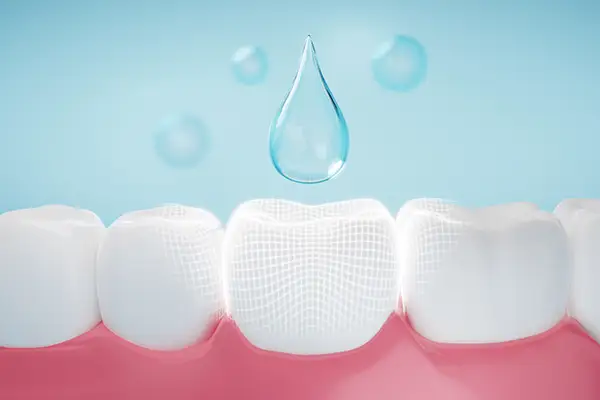 Fluoride treatments in Phoenix and North Scottsdale, AZ at Jerome Riddle DDS are a quick, professionally applied coat of fluoride varnish that helps teeth resist the acid attacks that lead to cavities. Our dentists recommend them based on what your exam shows, especially for kids and adults with a higher chance of decay.
The American Dental Association’s topical fluoride guideline is built for people at risk of cavities, and that’s how we use it. If your teeth are holding up well with fluoride toothpaste and Phoenix tap water, you may not need more. If you’ve had new cavities, exposed roots, or a dry mouth, a treatment at your dental exam can make a real difference.
This page covers topical fluoride only, the kind we put on your teeth in the chair or prescribe as a stronger toothpaste. It doesn’t cover fluoride drops or tablets for children, which are a separate, risk-based decision.
On This Page
What a Fluoride Treatment Does
Plaque bacteria feed on sugar and give off acid, and that acid pulls minerals out of your enamel. Fluoride helps put those minerals back, a repair process the ADA calls remineralization. When it happens faster than the damage, early weak spots harden again instead of turning into tooth decay that needs a filling.
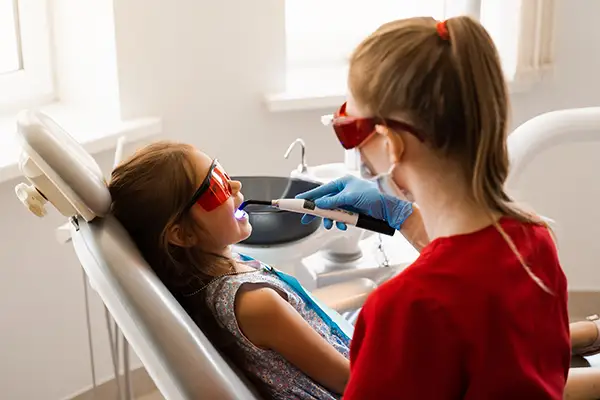
A professional treatment simply delivers a much stronger dose than toothpaste, right where it’s needed. Fluoride varnish is painted on as a thin coat that sets when it touches saliva. According to the ADA, it keeps fluoride in close contact with your teeth for several hours and then wears away over a period of hours.
How It Differs From Toothpaste and Tap Water
Toothpaste and fluoridated water give you a low, steady daily amount. A varnish or prescription product adds a concentrated boost for people whose daily amount isn’t keeping up with the acid. The ADA’s chairside guide notes that people at low risk may not need anything beyond over-the-counter fluoride toothpaste and fluoridated water, which is why we look at your risk before recommending a treatment.
Who Benefits Most
The ADA guideline lists several factors that raise cavity risk, and we look for them at every checkup. You’re a stronger candidate for a fluoride treatment if any of these apply:
| • |
Recent cavities – new decay in the past year is one of the clearest signs your teeth need more help
|
| • |
Dry mouth – less saliva means less natural rinsing and repair, and many common medications cause it
|
| • |
Exposed roots – once gums pull back, root surfaces have no enamel covering them, so decay can start more easily
|
| • |
Plaque that lingers – crowded teeth, hard-to-reach spots, or a rushed brushing routine let plaque sit longer
|
| • |
A sugary or snacking diet – frequent sips and snacks keep the acid coming all day
|
| • |
Gaps between dental visits – irregular care gives small problems time to grow |
None of these is a judgment. They’re just the things that tell us whether a quick varnish coat is worth it for you, or whether your current routine is already doing the job.
Fluoride for Children
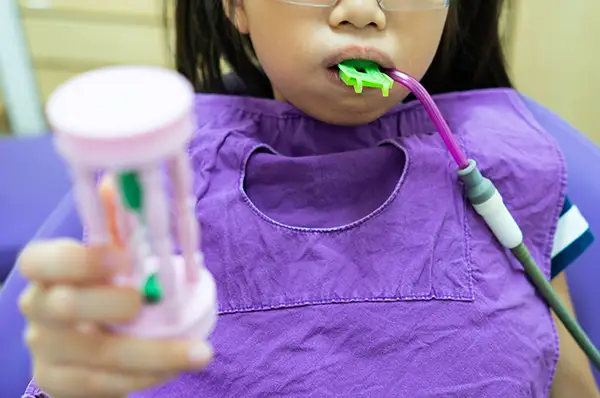 For kids under 6, the ADA guideline recommends one professional product only: 2.26% fluoride varnish. Gels aren’t recommended at that age, and neither are prescription-strength home products. Varnish goes straight onto the teeth and sets on contact with saliva, which keeps the visit short for little ones.
For children 6 and older, the options widen. The guideline supports either varnish or a 1.23% acidulated phosphate fluoride gel in the office, plus prescription-strength home products for kids at higher risk. The American Academy of Pediatric Dentistry also encourages professionally applied fluoride for anyone at risk for cavities.
We ask parents to bring babies in by their first birthday or first tooth, and our first dental visit page explains how those early lap visits work. As your child grows, we pair fluoride with checkups and, for back teeth, dental sealants. Our page on dentistry for kids covers the rest of your child’s routine care.
Toothpaste Amounts at Home
Home brushing still does most of the work. MouthHealthy, the ADA’s patient site, advises a smear of fluoride toothpaste about the size of a grain of rice for children under 3 and a pea-sized amount for ages 3 to 6, twice a day.
Fluoride for Adults
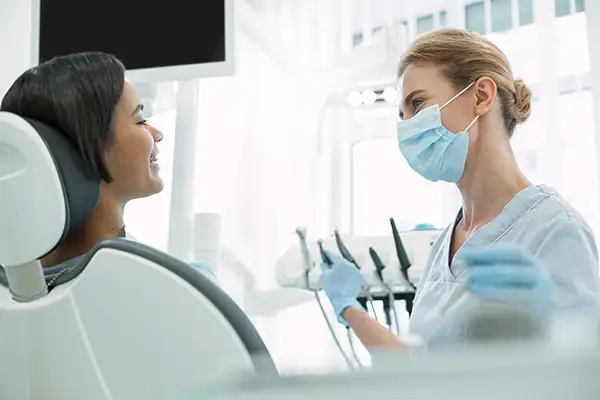 Fluoride isn’t just for kids. The ADA guideline includes recommendations for adults over 18 and a separate set for adult root cavities, with varnish or acidulated phosphate fluoride gel in the office and prescription-strength paste or rinse at home.
Exposed roots are one of the most common reasons adults need extra fluoride. When gums recede, the root surface has no enamel to protect it. Our gum recession treatment already includes fluoride varnish applied in the chair plus a desensitizing or prescription-strength fluoride paste at home, so fluoride often becomes one part of a bigger plan.
Sensitivity is another. If cold drinks make you wince, in-office fluoride varnish is one of the tooth sensitivity treatments we use alongside bonding and other options. Dry mouth from medications is a third, and it tends to show up more as people take more prescriptions over the years, a topic our page on dental care for seniors covers in more detail.
Fluoride Safety and the 2025 FDA Action
If you saw fluoride headlines in late 2025, here’s what actually happened. On October 31, 2025, the FDA sent notices to four companies saying it intended to take enforcement action against unapproved ingestible fluoride prescription drug products labeled for children under 3, or for older children at low or moderate risk for tooth decay. The agency concluded those swallowed products shouldn’t be used in children under 3 or in older children who aren’t at high risk.
That action was about fluoride that’s swallowed. The HHS announcement doesn’t mention fluoride varnish, toothpaste, or community water. The American Academy of Pediatric Dentistry responded the same day, disagreeing with the under-3 limit and saying it still supports supplements prescribed after a cavity risk assessment and a review of a child’s total fluoride exposure.
On varnish specifically, the ADA notes that careful application reduces the chance of swallowing it during the visit, and it cites the CDC finding no published evidence that professionally applied varnish is a risk factor for fluorosis, even in children younger than 6. Our job is to lay out the facts, check your child’s risk, and let you make the call.
What About Phoenix Tap Water?
The City of Phoenix says fluoride occurs naturally in its source water at about 0.3 parts per million, and the city adds fluoride during treatment to bring it to 0.7 parts per million. That matches the 0.7 mg/L level the U.S. Public Health Service recommends, according to the CDC. If you live outside Phoenix or drink well or filtered water, check with your water provider, and tell us at your visit so we can factor it in.
Meet Your Dentists
Dr. Jerome Riddle studied at Northern Arizona University, earned his dental degree at USC, and completed a general practice residency at the UCLA and VA hospitals. He’s been practicing in Scottsdale for more than two decades, in the area where he grew up. He builds each plan around a patient’s medical history, and that matters for fluoride, since the medications behind dry mouth are often the first clue that your teeth need extra protection.
Dr. Eric Johnston grew up in Tennessee, earned a biology degree in Chattanooga, and graduated from Loma Linda University School of Dentistry in 2017. An uncle who practiced dentistry inspired his career, and he aims to treat every patient’s dental needs the way he would treat his own family’s, which is the same standard we use when deciding whether a child or an adult really needs a treatment.
What to Expect at Your Visit
Fluoride is typically applied at the end of a regular checkup and cleaning, so it rarely needs its own appointment.
Step 1: We Check Your Risk
During your exam, we review your health history, medications, diet, and how often new cavities have shown up. Our Diagnodent laser reads changes inside the mineral structure of the biting surfaces to spot decay at its earliest stage, and digital X-rays show what’s happening between teeth.
Step 2: We Paint On the Varnish
We brush a thin layer of varnish onto your teeth. It sets when it meets saliva, so there’s no tray to hold in your mouth. Very young children can stay on a parent’s lap, the same way our lap visits work.
Step 3: We Go Over Aftercare
Before you leave, we’ll tell you when you can eat, drink, and brush, based on the product we used. The varnish wears off on its own over the next several hours.
Step 4: We Add Home Products If Needed
For patients 6 and older at higher risk, we may prescribe a prescription-strength fluoride toothpaste to use at home, as we already do for many patients with exposed roots. The ADA chairside guide lists 0.5% fluoride gel or paste twice a day as one home option.
Step 5: We Set Your Recheck Interval
The ADA guideline recommends professional varnish at least every three to six months for people at risk. We’ll match the interval to your risk and lengthen it once things settle down.
Fluoride and Sealants Work Together
 Fluoride protects every surface it touches, but the deep grooves on back teeth are hard to keep clean. That’s where sealants come in. A sealant fills those grooves with a protective coating so plaque has fewer places to settle, and fluoride keeps strengthening the rest of the tooth.
For a child with new permanent molars, it often makes sense to use both. For an adult with recession, fluoride varnish is usually the first step for exposed roots. Either way, the benefits stack up:
- Fewer fillings – stopping decay early can spare a tooth from the drill
- Less sensitivity – stronger enamel and treated roots often react less to cold
- Quick visits – both treatments fit into a routine checkup
- Support for exposed roots – fluoride reaches the root surfaces that sealants can’t cover
Neither treatment replaces brushing, flossing, and regular visits. They just make that routine more effective.
Why Choose Our Office
We treat toddlers through seniors under one roof, so the same team can follow how fluoride works for a child at the first lap visit and for a grandparent dealing with dry mouth. Seeing the whole family also makes it easier to spot shared habits, like a snacking routine, that keep cavities coming.
Our dental technology helps us decide who actually needs fluoride. The Diagnodent laser picks up early decay in grooves before it’s visible, and the intraoral camera lets you see weak spots on a screen. That’s how we keep treatments targeted instead of routine.
Timing is easier too. We open at 7 a.m. on Wednesdays and Thursdays, which makes a quick checkup and varnish visit possible before school or work. Our office is on E. Chauncey Lane, right at the Phoenix and North Scottsdale border.
Cost and Insurance
The cost of a fluoride treatment depends on the product used, whether it’s added to a checkup or done on its own, and whether you also need a prescription-strength home product. Coverage for fluoride varies from plan to plan, so we check before your visit rather than guessing.
We accept Aetna, Cigna, Delta Dental, and MetLife dental insurance, and our team can verify your benefits before your appointment. Our financial and insurance page explains how we handle estimates and co-payments. For a personal estimate, call 480-991-4410.
Schedule a Visit
Wondering whether fluoride makes sense for you or your child? Call 480-991-4410 or request an appointment online.
We’re at 7010 E. Chauncey Ln. Suite #140, Phoenix, AZ 85054-3111, open Monday through Thursday. Have a question first? Contact our office and we’ll get back to you.
Frequently Asked Questions
Do adults need fluoride treatments?
Adults at higher risk of cavities often benefit, and the ADA guideline includes varnish and acidulated phosphate fluoride gel for adults over 18 and for root cavities. Adults with low risk may do fine with fluoride toothpaste and fluoridated water alone. New cavities, exposed roots, and dry mouth are the usual reasons we suggest one.
How often should my child get fluoride varnish?
For children at risk of cavities, the ADA guideline recommends varnish at least every three to six months. Many kids get it at their regular checkups, and a child with frequent new cavities may need the shorter end of that range. We’ll set the interval after we look at your child’s teeth and history at their dental exam.
Is fluoride varnish safe for toddlers?
Varnish is the one professional fluoride product the ADA guideline recommends for children under 6. The ADA cites CDC findings of no published evidence that professionally applied varnish is a risk factor for fluorosis, even in children younger than 6. We use a small amount, paint it only on the teeth, and keep the visit short, much like the lap visits described on our first dental visit page.
Does the 2025 FDA decision affect fluoride varnish?
No. The October 2025 action targeted unapproved ingestible fluoride prescription products for young children and lower-risk older children. The HHS announcement does not mention varnish, toothpaste, or community water. Varnish is applied to the teeth and is not meant to be swallowed.
Does Phoenix tap water have fluoride?
Yes. The City of Phoenix adds fluoride to bring its water to 0.7 parts per million, and the City Council approved fluoridation in June 1990. Bottled, filtered, or well water can differ, and neighboring cities have their own providers, so check your water source if you’re not on Phoenix city water. Even with fluoridated water, people with a higher risk of decay can still benefit from a professional treatment.
How long does fluoride varnish stay on my teeth?
Only a few hours. The ADA explains that varnish isn’t meant to stick permanently: it holds fluoride against your teeth for several hours and wears off over that time. You may notice a slightly filmy feel until it brushes away, and we’ll tell you when it’s fine to eat and brush.
Can you prescribe a stronger fluoride toothpaste?
Yes, for patients who need it. Prescription-strength fluoride paste is already part of how we manage exposed roots in our gum recession treatment, and the ADA guideline supports 0.5% fluoride gel or paste at home for higher-risk patients 6 and older. It isn’t recommended for children under 6.
Should my child take fluoride drops or tablets?
That’s a separate decision from varnish, made case by case with your child’s dentist or pediatrician. The FDA concluded in 2025 that unapproved swallowed fluoride products shouldn’t be used in children under 3 or in older kids who aren’t at high risk, while the AAPD still supports supplements after a risk assessment. Bring your questions and your water source to your child’s next visit, and we’ll go over your child’s risk with you.
|