Gum Recession Treatment
Phoenix & North Scottsdale
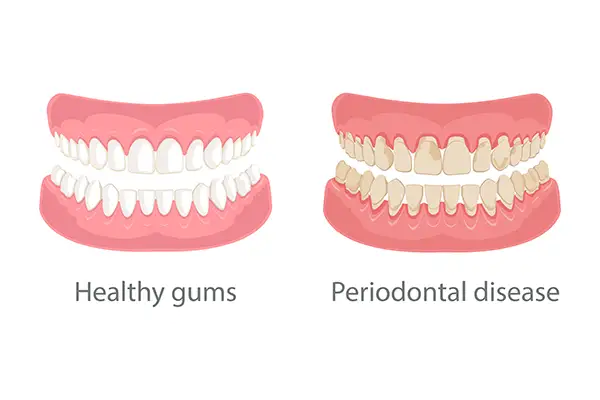 If your teeth look longer than they used to, gum recession treatment in Phoenix, AZ at Jerome Riddle DDS starts with the least popular fact about this condition: gum tissue that has pulled back does not grow again on its own. Nothing you brush with, rinse with, or swallow rebuilds it. What treatment does is stop the retreat and manage what the exposed root is doing to you in the meantime. If your teeth look longer than they used to, gum recession treatment in Phoenix, AZ at Jerome Riddle DDS starts with the least popular fact about this condition: gum tissue that has pulled back does not grow again on its own. Nothing you brush with, rinse with, or swallow rebuilds it. What treatment does is stop the retreat and manage what the exposed root is doing to you in the meantime.
That sounds bleak and it is not. Most recession we see is slow, and most of it stops responding to whatever was driving it once we find what that is. The teeth stay put, the sensitivity settles, and the line where gum meets tooth holds where it is. Patients who catch it early keep far more tissue than patients who watch it for five years.
The other honest piece: covering an exposed root means adding tissue back, and that is grafting, which belongs with a periodontist rather than a general practice. We will say plainly when your case is in that category. Everything short of it, which is the large majority of what we see, we handle here alongside the rest of our periodontal care.
On This Page
What Gum Recession Actually Is
 The gum line sits where it sits because tissue is attached to the tooth underneath it. Recession is that attachment point migrating toward the root, which uncovers surface that was never designed to be in your mouth. Enamel covers the crown. Below the gum line there is no enamel, just a thinner, softer layer that reacts to cold and decays faster. The gum line sits where it sits because tissue is attached to the tooth underneath it. Recession is that attachment point migrating toward the root, which uncovers surface that was never designed to be in your mouth. Enamel covers the crown. Below the gum line there is no enamel, just a thinner, softer layer that reacts to cold and decays faster.
What Causes It
Recession is usually more than one thing at once, which is why single-cause explanations rarely hold up:
- Periodontal disease – The most consequential cause, because it takes bone along with the tissue and shows up alongside bleeding gums rather than by itself.
- Brushing force and bristle stiffness – Heavy horizontal scrubbing with a medium or hard brush wears tissue away over years. This is real, and it is also over-blamed.
- Thin tissue you were born with – Some people have naturally thin gum tissue over prominent roots, and thin tissue recedes more readily under the same conditions.
- Tooth position – A tooth sitting outside the bone that should surround it has less to hold its gum in place, which is why crowding and recession often travel together.
- Clenching and grinding – Repeated overload flexes the tooth in its socket and stresses the tissue at the neck, and it usually leaves wear elsewhere as evidence.
- Time – Decades of ordinary function produce some recession in most people, which is where the phrase about being long in the tooth came from.
Smoking, lip and tongue piercings, and orthodontic movement through thin bone belong on the list too. When we find several of these stacked in one mouth, and we usually do, the treatment plan addresses them in order of how much damage each one is still doing.
Why It Matters Beyond Appearance
Exposed root reacts to cold, to sweet, and sometimes to a toothbrush passing over it, which is the complaint that brings most people in and is treatable on its own through tooth sensitivity treatments. The bigger issue is that root surface has no enamel protecting it, so tooth decay moves through it faster than it would through a crown. Recession also creates a shape that collects plaque more easily than a healthy gum line does, which feeds the disease that may have started the recession. And where the tissue has thinned enough, continued attachment loss eventually reaches the point where the tooth loosens.
Your Gum Recession Team in Phoenix
Recession is a condition you evaluate over years rather than at one appointment, and the value of a dentist who has worked the same neighborhood across two decades is that he has watched the same gum lines at 40 and at 60. That is the case for Dr. Jerome Riddle, whose bio page carries the training behind two-plus decades of work in this area.
His stated approach, patience and gentle technique, is also directly relevant. A patient who has worn tissue away by scrubbing does not need to be told they caused it. They need somebody to hand them a soft brush, show them the angle, and check the same three teeth in six months to see whether it worked.
Dr. Eric Johnston finished dental school in 2017 and handles much of the restorative side, which matters here because the notched, sensitive root surfaces recession leaves behind get repaired rather than regrown. More on Dr. Johnston’s bio page.
How We Manage Recession
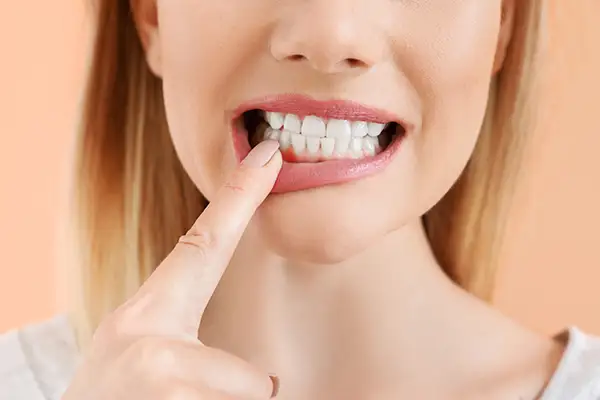 Treatment splits three ways: measure what is happening, remove whatever is still driving it, and repair the damage already done. Very little of that is dramatic, and almost none of it is surgical. Treatment splits three ways: measure what is happening, remove whatever is still driving it, and repair the damage already done. Very little of that is dramatic, and almost none of it is surgical.
Measuring and Tracking
Recession gets recorded in millimeters from a fixed landmark on the tooth, not eyeballed, because the whole clinical question is whether the number is moving. We chart those measurements alongside pocket depths and capture the same teeth with the intraoral camera on our technology page, so the comparison at your next visit is a photograph rather than an impression. Three millimeters that has been three millimeters for four years is a very different situation from three millimeters that was one millimeter last year.
Removing the Cause
If active periodontal disease is behind it, that gets treated first, usually with a deep cleaning below the gum line. Our soft tissue laser plays a role in that, removing infected pocket lining so healthy tissue can heal against a clean root. It does not rebuild tissue that is already gone. A laser is a tool for treating infection, not a way to grow gum back, and the difference is worth being clear about.
Brushing force gets corrected with a soft brush and a technique change, which sounds trivial and is one of the highest-return things we do. Grinding gets a night guard, and the underlying habit is worth addressing through teeth grinding treatment rather than only padding the teeth against it. Where a bite is loading one tooth harder than its neighbors, adjusting how the teeth meet takes the pressure off. Where crowding has pushed a tooth outside its bone, Invisalign sometimes moves it back into a position the gum can hold.
Repairing What Is Already Exposed
Sensitive root surface responds to desensitizing agents and fluoride varnish applied in the chair, plus a desensitizing or prescription-strength fluoride paste at home. Where recession has worn a notch into the root, dental bonding fills it with tooth-colored composite, which handles the sensitivity, the appearance, and the plaque trap in one step. Decay on an exposed root gets restored like any other cavity, though we watch those areas more closely afterward.
When You Need a Periodontist
Covering an exposed root requires adding tissue, and gum grafting is periodontal specialty work. We refer that out rather than performing it in this office. Cases that generally warrant a referral include recession deep enough to threaten the remaining attachment, a tooth with essentially no attached gum tissue left, or aesthetic recession on a front tooth where nothing short of grafting will satisfy you. We will tell you that at the evaluation and help you find the right specialist. One thing worth clearing up: gum contouring is the opposite procedure. It removes excess tissue for cosmetic reasons and does nothing for a gum line that has already retreated.
What Treatment Can and Cannot Do
Managing recession is about protecting the tissue still attached, not restoring what is gone. That trade is worth understanding before you decide how urgent this feels.
| • |
The recession stops advancing - Once the cause is removed, most recession stabilizes. The exposed root still needs watching, but it stops costing you more tissue.
|
| • |
Sensitivity becomes manageable - Chairside treatment plus the right paste at home resolves most cold and sweet sensitivity within a few weeks.
|
| • |
Root decay gets caught early - Exposed root is checked at every visit, which is the difference between a small restoration and a crown.
|
| • |
Notched roots get filled - Bonding restores the shape, which removes the plaque trap and usually improves how the tooth looks at the same time.
|
| • |
You get a number to track - Millimeters measured against a fixed point tell you whether anything you changed is working, which guesswork never does. |
What treatment will not do is bring the gum line back. Being straight about that upfront saves you from spending a year on products that were never going to work, and it makes the decision about a grafting referral a clear one rather than a last resort.
Why Phoenix Patients Trust Us With This
Recession is the condition where overtreatment and undertreatment both look reasonable in the moment. A gum line that has not moved in a decade needs watching, not intervention. A gum line climbing a millimeter a year needs the opposite. Measuring and recording, visit after visit, is the only thing that separates the two.
Our documentation is built for that. Recession depths and pocket depths go in the chart together, and the intraoral camera captures the same teeth from the same angle so year-over-year comparison is visual as well as numerical. You see the images. They are not a file we keep to ourselves.
Two dentists practice here, one of them for more than two decades in this area, and the office keeps a soft tissue laser, digital X-ray, and 3D imaging on site. The practice is at 7010 E. Chauncey Ln. Suite #140, zip 85054, close enough for most of North Scottsdale that a twice-yearly recheck stays easy to keep.
We also refer out without hedging. Grafting is one of the places where the honest answer is a specialist, and saying so at the first visit beats saying it after a year of management that was never going to be enough.
Gum Recession Treatment Cost and Insurance
What recession costs tracks which of its causes you turn out to have. The evaluation and the measurements are one number. After that, a night guard, a deep cleaning, bonding on three teeth, and a desensitizing protocol are four separate price points, and some patients need one of them while others need three.
The evaluation is where the honest number comes from. You will have a written estimate before anything beyond it happens, and if part of the plan can reasonably wait, we will tell you which part.
Insurance treats these as separate services rather than as one recession benefit. Periodontal treatment, occlusal guards, and restorative bonding each sit in their own coverage category, and guards in particular vary widely from plan to plan. Whether any given piece is covered depends on your plan, and our financial and insurance page lists the ones we accept. If treatment stacks up across several teeth, payment plans are available to spread it. Bring your plan details to the evaluation, or call 480-991-4410 ahead and we will have the numbers ready.
Schedule a Recession Evaluation
Recession you can see in the mirror is worth measuring, because the number is what tells you whether it is moving. Call 480-991-4410 and we will get a baseline on the chart. We are at 7010 E. Chauncey Ln. Suite #140 in Phoenix, AZ 85054. If online is easier, our Request an Appointment page takes it from there. Office hours and directions are on our Contact page.
Frequently Asked Questions
Do receding gums grow back?
No. Gum tissue that has detached and moved down the root does not reattach or regenerate on its own, and no toothpaste, oil, rinse, or supplement changes that. What can change is whether it continues. Treatment aims at stopping the process and managing the exposed surface. The only way to physically cover a root again is a graft, which is a periodontist procedure.
Did I cause this by brushing too hard?
Possibly a share of it, rarely all of it. Aggressive brushing is a genuine cause, but it usually needs company: thin tissue, a tooth sitting forward in the arch, or gum disease running underneath. The giveaway for a brushing cause is a pattern that follows your dominant hand, with the worst recession on the side you reach across to. Anyone whose recession is even across the whole mouth is looking at something else.
Does gum recession mean I am going to lose the tooth?
Usually not, and the distinction is what the recession is attached to. Recession from brushing or from a tooth sitting forward exposes root without taking bone with it, and those teeth typically stay solid for decades. Recession driven by periodontal disease is different, because the bone goes with the tissue. Which one you have is answered by an X-ray and a pocket chart, not by how the gum looks.
Do you do gum grafting at your Phoenix office?
No. Grafting is periodontal specialty work and we refer it out rather than performing it here. What we do handle is everything that determines whether you need it: finding and removing the cause, restoring notched and sensitive roots, and tracking whether the recession is stable. Plenty of patients arrive assuming grafting is the only option and leave on a management plan instead.
Why are my teeth suddenly sensitive to cold?
Because the root surface underneath your gum line has no enamel on it. It is dentin, and dentin carries microscopic tubes that run straight to the nerve, so cold reaches the nerve far more directly than it does through a crown. That is also why the sensitivity often appears before you notice the recession itself. Desensitizing treatment in the chair plus a desensitizing paste at home settles most of it.
What kind of toothbrush should I be using?
Soft bristles, always, and pressure matters more than the brush. An electric brush with a pressure sensor is the easiest fix for people who scrub, because it corrects you in real time rather than at your next appointment. Angle the bristles toward the gum line at about 45 degrees and use short strokes instead of long horizontal sweeps. Our oral hygiene page covers the basics that go with it.
Will insurance cover gum recession treatment?
Parts of it, filed under different categories. Periodontal treatment goes in one bucket, bonding on an exposed root in another, and a night guard in a third that some plans exclude entirely. There is no single code for recession itself. The practical move is to have us verify each piece before you schedule, because patients are usually surprised in both directions.
How often should recession be checked once it has stabilized?
At every hygiene visit, which for most stable patients means twice a year and for anyone with a periodontal history means more often. Recession moves slowly enough that six months between measurements catches it comfortably. Patients on a shorter recall through periodontal maintenance get it checked three or four times a year without scheduling anything extra.
|