Periodontal Maintenance
Phoenix & North Scottsdale
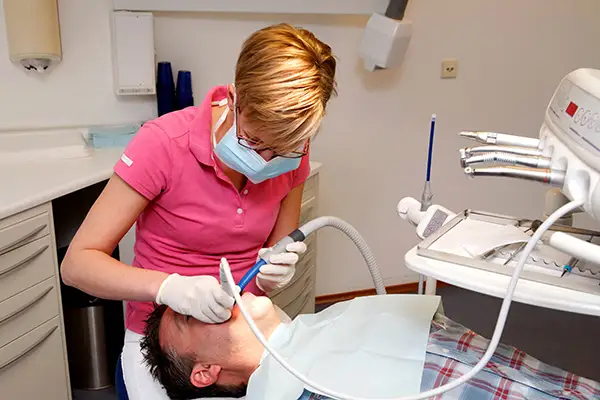 If somebody has told you that you now need periodontal maintenance in Phoenix, AZ every three or four months instead of a cleaning twice a year, Jerome Riddle DDS can tell you exactly why the number changed. It is not an upgrade and it is not a package. It is the standard of care for a mouth that has already been treated for gum disease, and the interval is shorter because the bacteria come back on a schedule of their own. If somebody has told you that you now need periodontal maintenance in Phoenix, AZ every three or four months instead of a cleaning twice a year, Jerome Riddle DDS can tell you exactly why the number changed. It is not an upgrade and it is not a package. It is the standard of care for a mouth that has already been treated for gum disease, and the interval is shorter because the bacteria come back on a schedule of their own.
Periodontitis is controlled rather than cured. Once the attachment between gum and tooth has been lost, the pockets that remain are permanent low-oxygen spaces, and the bacteria that live in them repopulate whether or not you floss well. Maintenance is the appointment that clears them out before they rebuild enough to restart the damage.
Most patients arrive here right after finishing a deep cleaning. This page covers what the visits actually contain, why the interval is what it is, and how insurance handles it, which is the part that surprises people most.
On This Page
What Periodontal Maintenance Is
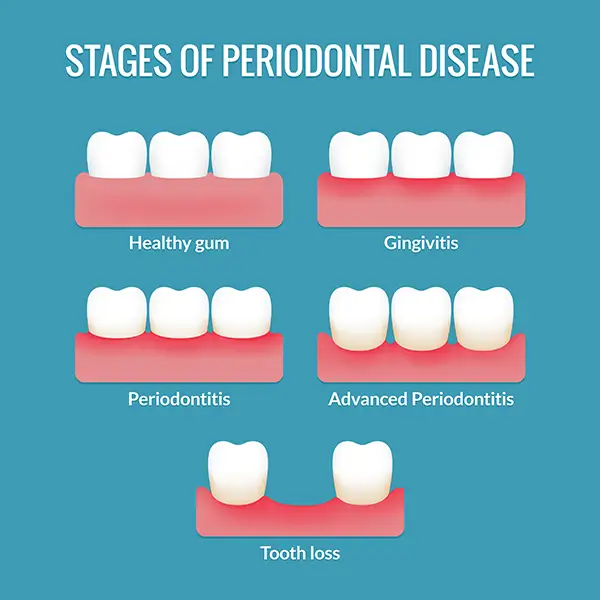 It is ongoing therapy for a treated disease, not a cleaning with a longer name. Scaling and root planing removes the bacterial deposits from inside the pockets and lets the tissue heal back against clean root surface. Maintenance is what keeps that surface clean afterward, on an interval short enough that the colonies never get back to the density that caused the damage in the first place. It is ongoing therapy for a treated disease, not a cleaning with a longer name. Scaling and root planing removes the bacterial deposits from inside the pockets and lets the tissue heal back against clean root surface. Maintenance is what keeps that surface clean afterward, on an interval short enough that the colonies never get back to the density that caused the damage in the first place.
How It Differs From a Regular Cleaning
A routine dental cleaning is preventive. It is for a mouth with healthy attachment, and the instruments stay at and just under the gum line because there is nowhere deeper to go. Maintenance is therapeutic. The instruments go below the gum line at every visit, into sites that were diseased and often still measure four millimeters or deeper, where exposed root surface collects deposits a polish never reaches.
Three practical differences follow from that. Maintenance appointments run longer, because subgingival work on multiple teeth takes time a polish does not. Pocket depths get monitored rather than assumed, so measurement is part of the visit and not just an annual exercise. And the appointment carries a different billing code than a routine cleaning, which is where a lot of the confusion about insurance starts.
Why the Interval Is Three to Four Months
This is the question worth answering properly, because the number looks arbitrary and is not. After a pocket is cleaned out, the bacterial community inside it starts rebuilding immediately, and the periodontal literature generally puts the return toward pre-treatment levels somewhere around nine to twelve weeks for most patients. Three to four months lands just past that window, which means each visit interrupts the regrowth before it reaches the density that drives attachment loss.
Six months is roughly two full rebuild cycles. That is why a patient with treated periodontitis on a twice-yearly schedule tends to lose ground steadily even while feeling fine, and it is why the interval is the treatment as much as the instruments are.
Which end of the range you land on depends on your specific risk. Patients who smoke, whose diabetes is not well controlled, who have residual pockets at five millimeters or deeper, or who have a family history of early tooth loss generally run at three months. Patients whose numbers came down well after treatment and who have no other risk factors often do fine at four.
Who Ends Up on This Schedule
Anyone who has completed scaling and root planing, which is the largest group. Patients whose pocket depths and bone loss show established periodontitis even if they have not been treated yet. And patients with a history of the disease who have been stable for years, because stability is a result of the schedule rather than a reason to leave it. Symptom-side patients often arrive here through treatment for bleeding gums or gum recession without knowing that a permanent change to their recall was part of the diagnosis.
Your Maintenance Team in Phoenix
Maintenance is hygiene-led, and that is a feature rather than a caveat. Your hygienist is the person who charts your pockets, works the root surfaces, and notices when a site that was three millimeters for two years reads four. Continuity there matters more than it does in most dental work, because the whole discipline is comparison against your own previous numbers.
Dr. Jerome Riddle reviews those numbers and decides when the interval needs to change. He has practiced in this area for more than two decades and describes his own approach as patient and gentle, which is worth something at an appointment you will be keeping three or four times a year for a long time. His bio page covers the training behind it.
Dr. Eric Johnston, in practice since 2017, handles the restorative work that maintenance patients tend to need alongside it, since exposed root surfaces develop decay more readily than crowns do. His bio page has more.
What Happens at Each Visit
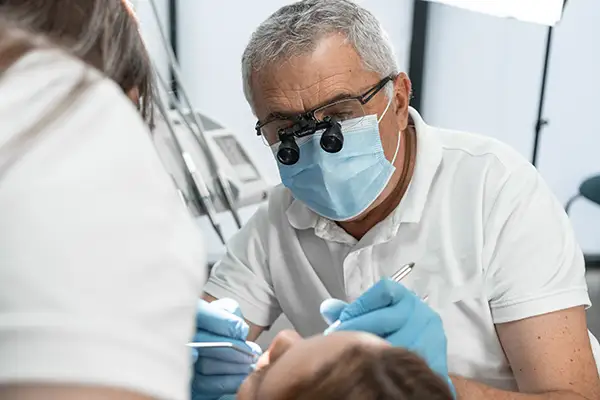 The visit runs about the same length every time, and the sequence rarely varies, which is intentional. Consistency is what makes the numbers comparable. The visit runs about the same length every time, and the sequence rarely varies, which is intentional. Consistency is what makes the numbers comparable.
Charting Before Cleaning
Pocket depths get re-probed and bleeding points recorded before any instrument does any cleaning. That order matters, because scaling first would produce bleeding that has nothing to do with your disease status. The numbers go straight against your previous visit, and anything that moved gets flagged then rather than discovered later.
Cleaning Above and Below the Gum Line
Ultrasonic and hand instruments remove deposits from the crown surfaces and from inside each pocket, working down to the base of the attachment. Rough spots on exposed root get smoothed, since a rough surface recolonizes faster than a polished one. Most patients do not need to be numbed for this. Where a specific site is tender or unusually deep, we numb that area and leave the rest alone.
Imaging, Polishing, and the Plan
We photograph the same sites with the intraoral camera each time so the comparison across visits is visual as well as numerical, which is one of the reasons the equipment on our technology page earns its place. Polishing finishes the visit. Then we talk about the two or three specific spots your home care is not reaching, which is a more useful conversation than a general reminder to floss.
Some root sensitivity for a day or two afterward is normal, particularly to cold, and tooth sensitivity treatments are available for anyone whose sensitivity outlasts that.
When the Interval Changes
Nothing about three months is permanent in either direction. Pockets that stay shallow and stop bleeding across several visits can support a move to four months. Numbers that climb move you the other way, and occasionally back into active treatment. A tooth that starts to loosen or a pocket that deepens past what maintenance can hold gets a referral to a periodontist, and we would rather make that call on a trend than after a tooth is lost.
What Staying on Schedule Protects
The benefit of maintenance is entirely negative, in the sense that what you get is the absence of things that would otherwise happen. That makes it a hard appointment to feel good about and an easy one to skip, which is exactly why it is worth naming what it holds off.
| • |
The bone you have left stays where it is - Attachment loss resumes when the bacteria rebuild, and every millimeter lost is permanent.
|
| • |
Teeth stay anchored - Treated periodontitis on a maintained schedule is a manageable condition. Left unmaintained, it sits among the leading causes of adult tooth loss.
|
| • |
Problems get caught at the small stage - Four looks at your mouth a year finds root decay, failing margins, and cracks earlier than two do.
|
| • |
You avoid repeating the deep cleaning - Relapse means going back through scaling and root planing, which costs considerably more than the visits that would have prevented it.
|
| • |
The whole-body inflammation load stays down - Periodontal inflammation carries documented associations with cardiovascular disease and with diabetes control, and controlled gums remove one ongoing source. |
None of this works without the home half. Maintenance handles what you cannot reach; everything above the gum line between visits is yours, and our oral hygiene page covers the technique that actually holds the gains.
Why Phoenix Patients Stay on Schedule With Us
Adherence is the entire clinical problem with maintenance. A patient who commits for eight months and drifts has bought very little. What keeps people coming back is seeing their own numbers, which is why we chart in front of you and put the intraoral camera images on the screen rather than describing them.
The interval is also set by your risk rather than by a default. Three months and four months are different recommendations, and we will tell you which one your chart supports and why. The recommendation comes off your chart.
Our office sits at 7010 E. Chauncey Ln. Suite #140, on the Phoenix and North Scottsdale line in the 85054 zip, which matters more for an appointment you keep four times a year than for one you keep twice. A recall that requires crossing the valley is a recall people quietly abandon.
We are also direct about what maintenance cannot do. It holds a treated disease steady. It does not rebuild lost bone, and when a site keeps deepening despite good adherence, the honest next step is a periodontist rather than a fifth round of the same appointment. Your ongoing periodontal care should include somebody willing to say that.
Periodontal Maintenance Cost and Insurance
The per-visit cost sits close to a routine cleaning. The frequency is what changes, and that is the number to plan around: three or four visits a year rather than two. This is not a premium tier of cleaning. Clinically it is the minimum standard for a mouth that has already lost attachment, and the pricing follows from that.
Insurance is where this gets genuinely confusing, and it is worth understanding before you are surprised at the desk. Periodontal maintenance is billed under its own code, D4910, which is separate from the routine cleaning code. Many plans cover two hygiene visits per calendar year total and count maintenance visits against that same allowance, which means visits three and four may land on you. Some plans cover three or four maintenance visits once a periodontal diagnosis is documented. A few require that scaling and root planing appear in your history before they will pay for maintenance at all.
Our financial and insurance page lists which plans we accept, and the periodontal section of a policy is the part worth reading closely. Payment plans are available if the out-of-pocket visits are the sticking point. Call 480-991-4410 and our front office will pull your specific periodontal allowance, because this is one benefit worth knowing precisely rather than approximately.
Schedule Your Next Maintenance Visit
If your last periodontal visit was more than four months ago, that is the reason to call 480-991-4410. We will get you back on the interval. We are at 7010 E. Chauncey Ln. Suite #140 in Phoenix, AZ 85054. Existing patients can rebook through our Request an Appointment page instead. Directions and current hours sit on our Contact page.
Frequently Asked Questions
Do I have to be on periodontal maintenance forever?
In almost all cases, yes, and we would rather say so than let you find out in year three. Periodontitis is controlled rather than cured, and the pockets that remain after treatment stay susceptible for life. The interval can lengthen from three months to four if your numbers hold, but going back to twice a year usually means going back to losing attachment.
My gums feel completely fine now. Why can I not go back to a regular cleaning?
Because feeling fine is the normal state of periodontitis, which is why it destroys so much bone before anyone notices. Attachment loss is painless. The pockets that remain after successful treatment are still pockets, and they still fill with bacteria on the same timeline whether or not you feel anything. Feeling fine is evidence the schedule is working, not evidence you can stop.
Is periodontal maintenance just an expensive cleaning?
No, and the difference is where the instruments go rather than what the appointment costs. A routine cleaning works at and just above the gum line. Maintenance works inside pockets and on exposed root surface at every visit, and includes re-charting your pocket depths. Per visit it is priced close to a cleaning. It only feels expensive because there are twice as many of them.
What happens if I skip a maintenance visit or two?
One missed visit is usually recoverable. A year off is where patients typically come back with deeper pockets than they left with and need scaling and root planing again. The pattern we see most is not a decision to quit but a slow drift, one rescheduled appointment turning into a nine-month gap. If you have already drifted, come back anyway. Starting again beats waiting until it feels overdue.
Does periodontal maintenance hurt?
Less than the deep cleaning that preceded it, and most patients do not need numbing at all. The pockets are shallower than they were before treatment, and there is far less hardened deposit to remove each time. Where one specific site is deep or tender, we numb just that area. Sensitivity for a day or two afterward is the more common complaint, and it fades.
Will my insurance cover periodontal maintenance in Phoenix?
Partially, and the detail that catches people is the annual limit rather than the percentage. Most plans allow two hygiene visits per year and count maintenance against that allowance, so the third and fourth visits often come out of pocket even when the first two are well covered. Some plans allow four once periodontal treatment is documented in your history. Have us verify your specific allowance rather than assuming either version.
Can I alternate between my regular dentist and a periodontist?
Yes, and for advanced cases that arrangement works well, with the specialist handling the deeper sites and our office handling the alternating visits along with your exams and restorative work. The one thing to avoid is both offices assuming the other is charting. Tell each of us who else you are seeing and how often, and ask that the pocket charts get shared.
Do I still need a separate dental exam and X-rays?
Yes, though they get folded into the maintenance schedule rather than booked separately. A dental exam happens on its own rhythm alongside your visits, and bone-level X-rays get taken on a longer cycle unless something on your chart calls for them sooner. Maintenance patients tend to need this more than average, since exposed root surface is where new decay shows up first.
|