Bleeding Gums Treatment
Phoenix & North Scottsdale
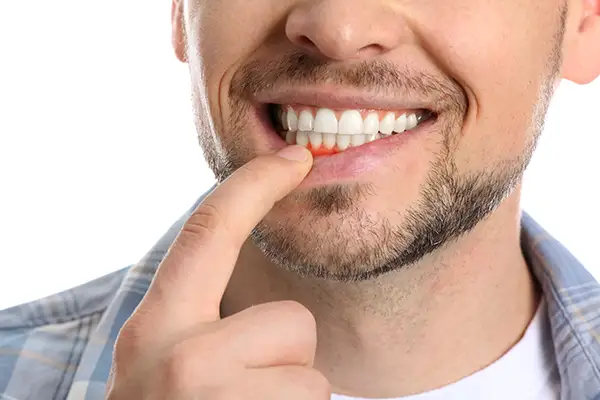 Gums that bleed when you brush are not normal, and bleeding gums treatment in Phoenix, AZ at Jerome Riddle DDS begins by working out how far the problem has already traveled. Healthy gum tissue does not bleed under a soft brush or a strand of floss. When it does, something is inflaming it, and the useful question is not whether to treat it. It is which of two very different problems you have. Gums that bleed when you brush are not normal, and bleeding gums treatment in Phoenix, AZ at Jerome Riddle DDS begins by working out how far the problem has already traveled. Healthy gum tissue does not bleed under a soft brush or a strand of floss. When it does, something is inflaming it, and the useful question is not whether to treat it. It is which of two very different problems you have.
Gingivitis and periodontitis both bleed, and they look nearly identical in a mirror. One is fully reversible with a cleaning and a few weeks of better habits. The other has already taken bone that will not grow back on its own, and it gets managed for life rather than cured. Pocket depth and an X-ray separate them. Appearance does not.
Bleeding is also the symptom people ignore longest, because it is painless, intermittent, and easy to file under brushing too hard. Patients often turn up years after the first pink in the sink, and those years narrow what periodontal care is able to undo.
On This Page
Why Gums Bleed
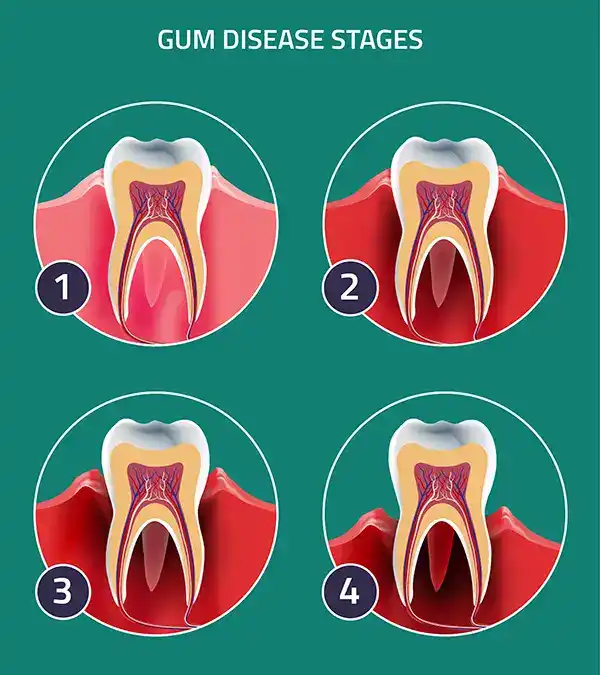 Plaque left along the gumline for a day or two hardens into tartar, and your immune system responds to the bacteria in it. Inflamed tissue swells, its capillaries sit closer to the surface, and it opens at the lightest contact. That is gingivitis. Nothing structural has been lost yet, and that is the entire good news of the diagnosis. Plaque left along the gumline for a day or two hardens into tartar, and your immune system responds to the bacteria in it. Inflamed tissue swells, its capillaries sit closer to the surface, and it opens at the lightest contact. That is gingivitis. Nothing structural has been lost yet, and that is the entire good news of the diagnosis.
Ignored, the inflammation works its way below the gumline. The fibers anchoring gum to tooth let go, a pocket opens where they used to attach, and the bone holding the tooth begins to withdraw from the infection. That is periodontitis. The bleeding can look exactly the same on the day you notice it, which is why nobody should be diagnosing this from a photograph or a symptom list.
What Actually Separates the Two
Measurement. A healthy sulcus around a tooth is roughly one to three millimeters deep. At four millimeters and beyond, the space has become a pocket that a toothbrush cannot enter and that harbors bacteria full time. Pair that measurement with an X-ray showing where the bone level sits, and the answer stops being a judgment call. Gingivitis reverses. Periodontitis gets controlled, and control is genuinely achievable, but it takes an ongoing schedule rather than a single visit.
When Bleeding Is Not Just Plaque
Several other things bleed gums, and some of them arrive alongside plaque rather than instead of it:
- Brushing technique – Hard bristles and heavy pressure abrade tissue directly. Worth correcting, though generalized bleeding across the whole mouth is rarely technique alone.
- Hormonal shifts – Pregnancy, puberty, and the menstrual cycle all exaggerate how strongly gums react to the same amount of plaque.
- Blood thinners and antiplatelet medication – These do not cause the inflammation, but they make whatever inflammation exists bleed more dramatically.
- Medications that thicken gum tissue – Some seizure, transplant, and blood pressure drugs cause overgrowth that traps plaque in places you cannot clean.
- Diabetes that is running high – Elevated blood sugar impairs the tissue response, and the relationship runs both directions.
- Smoking, in reverse – Nicotine constricts the small vessels in gum tissue, so smokers often bleed less while their disease progresses faster.
That last one deserves emphasis, because it misleads people constantly. A smoker with quiet gums is not a smoker with healthy gums. It is one of the situations where the symptom you are watching has stopped reporting accurately, and probing is the only way to find out what is actually happening under there.
Pregnancy gingivitis deserves a word too. It is common, it typically peaks in the second and third trimesters, and it is not a reason to postpone dental care. Routine cleanings during pregnancy are considered safe and are more valuable then than at almost any other time.
Your Periodontal Care Team in Phoenix
Patience and gentle technique is how Dr. Jerome Riddle characterizes the way he works, and full-mouth probing is the appointment where a patient finds out whether that is a slogan or a habit. Charting every tooth means a lot of small contacts with tissue that is already sore. Done carelessly it is a miserable appointment. Done properly most patients are surprised how little they feel.
Twenty-plus years in practice sits behind that, and his bio page covers where the training came from.
Dr. Eric Johnston finished at Loma Linda University School of Dentistry in 2017 and has kept adding techniques since, which matters in periodontal work because the standard of care here has moved considerably in the last decade. His bio page has the rest.
What Happens at Your Evaluation
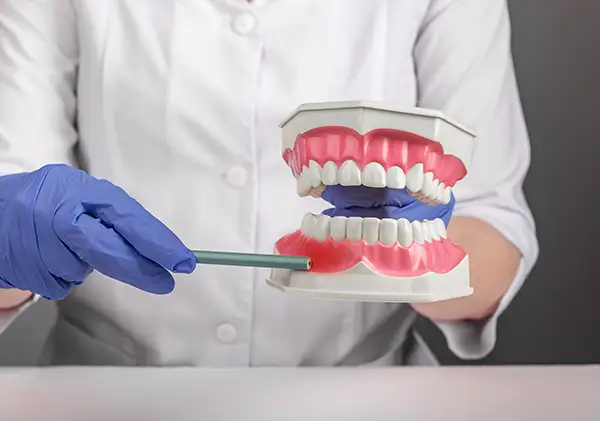 Nothing gets treated at the first appointment until it has been measured. That sequence is not caution for its own sake. Recommending a deep cleaning to someone with gingivitis is overtreatment, and recommending a polish to someone with five-millimeter pockets is worse. Nothing gets treated at the first appointment until it has been measured. That sequence is not caution for its own sake. Recommending a deep cleaning to someone with gingivitis is overtreatment, and recommending a polish to someone with five-millimeter pockets is worse.
Measuring Before Treating
Your hygienist walks a thin probe around every tooth, recording depth at six points each and marking which of those points bleed on contact. Bleeding on probing is how we separate inflammation that is active right now from a site that has already settled. We note where gums have receded, since gum recession treatment follows a different path from pocket treatment. We also check tooth mobility and take X-rays to read the bone level, because pocket depth alone cannot separate a swollen gum from a lost attachment.
Which Cleaning You Actually Need
Gingivitis with shallow pockets goes to a standard dental cleaning, and the tissue usually stops bleeding within two weeks of consistent home care afterward. Pockets at four millimeters and beyond, with bone loss to match, go to a deep cleaning that reaches below the gumline and smooths the root surfaces so tissue can reattach. That work gets split across two visits with one side of the mouth numbed at each, so you can still chew normally on the other side the same day. Our soft tissue laser also has a role here, since it removes infected pocket lining and lets healthy tissue regenerate, and it is one of the tools listed on our technology page.
What Happens After
We re-measure six to eight weeks after treatment finishes. That visit is the honest scorecard: pockets that shrank, points that stopped bleeding, and anywhere that did not respond. Anyone treated for periodontitis then moves onto an ongoing schedule rather than back to twice-yearly cleanings, which our periodontal maintenance page covers in full. Cases that have progressed past what root planing can hold belong with a periodontist, and we will say so rather than repeating a treatment that was never going to work.
What Treating Bleeding Gums Actually Changes
Bleeding stopping is the visible result. The reason to act on it is everything happening underneath while it bleeds, because inflammation that has been running for years does not stay confined to the gums it started in.
| • |
Gingivitis reverses completely - Caught before attachment loss, gum tissue returns to full health with no lasting damage. That window does close.
|
| • |
Bone loss slows or stops - Bone already lost to periodontitis will not rebuild on its own, which makes every month of delay a permanent cost rather than a deferred one.
|
| • |
Teeth stay anchored - Periodontal disease is a leading reason adults lose teeth that never had a cavity in them.
|
| • |
The odor usually goes with it - Pockets producing inflammation are producing the sulfur compounds behind persistent bad breath at the same time.
|
| • |
One source of chronic inflammation comes off the list - Gum disease has documented associations with cardiovascular disease and with diabetes control, and treating it removes an ongoing inflammatory load. |
The habits matter as much as the appointment, which is the part nobody enjoys hearing. A deep cleaning buys back tissue health that daily flossing then has to hold. Technique beats duration here, and our oral hygiene page covers what that looks like between visits. Persistent odor travels with all of this often enough that bad breath treatment frequently turns out to be the same treatment reached from a different symptom.
Why Phoenix Patients Choose Our Office for Gum Care
We measure before we recommend. Charting is hygienist work here rather than a line item at the end of an exam, and the numbers get read back to you tooth by tooth. You will leave the first appointment knowing your pocket depths, which sites bled on contact, and where your bone level sits, rather than knowing only that your gums looked inflamed.
The intraoral camera turns that into something you can see. Watching tartar sitting under the gumline on a screen does more for follow-through than any explanation we could give, and we capture the same sites again at later maintenance visits so the comparison is a picture rather than a memory.
Two dentists work here, and the office keeps a soft tissue laser alongside digital X-ray and 3D imaging, so periodontal treatment and the imaging that guides it happen in the same building. We are also clear about the limits of a general practice: advanced cases belong with a periodontist, and we would rather make that call early than after two rounds of treatment that were never going to hold.
Our office sits at 7010 E. Chauncey Ln. Suite #140, on the Phoenix and North Scottsdale line in the 85054 zip, which puts a three-month or four-month recall within reasonable reach for most of our patients rather than turning it into a project.
Bleeding Gums Treatment Cost and Insurance
Cost matters, and the honest version is that the evaluation costs the same regardless of what it finds, while the treatment does not. A gingivitis diagnosis means an exam and a routine cleaning. A periodontitis diagnosis means an exam plus a deep cleaning that is usually billed by quadrant, so the number scales with how much of your mouth is involved.
That is another reason not to wait. The difference between one quadrant of treatment and four is not a small one, and it is decided by how long the inflammation ran before somebody measured it. You will have a written estimate before any treatment starts, and the exam always comes first.
Coverage splits the same way. Cleanings and exams tend to be covered at a high percentage. Scaling and root planing falls under periodontal benefits, which commonly carry their own frequency limits and sometimes a separate deductible. Coverage details for Aetna, Cigna, Delta Dental, and MetLife plans sit on our financial and insurance page. Payment plans exist for the gap between what benefits pay and what treatment costs. Call 480-991-4410 and our front office will verify your specific periodontal coverage before you book.
Schedule a Gum Evaluation
Bleeding gums are cheapest to treat on the day you first notice them. Call 480-991-4410 and we will get you measured. We are at 7010 E. Chauncey Ln. Suite #140 in Phoenix, AZ 85054. Booking through our Request an Appointment page works just as well, and our Contact page lists hours and directions.
Frequently Asked Questions
Is it normal for gums to bleed a little when I floss?
Common, but not normal, and the distinction is the whole point. Healthy gum tissue tolerates floss without breaking. Blood means inflammation is present at that spot. The one exception is the first week or two after you start flossing consistently again, when previously inflamed tissue bleeds on contact before it settles.
My gums bleed more since I started flossing. Should I stop?
No. This is the single most common reason people quit flossing a week in, and it is backwards. You are disturbing inflamed tissue that has been left alone, and inflamed tissue bleeds. Keep going daily, be gentle, and give it about two weeks. If bleeding has not clearly decreased by then, the inflammation is deeper than floss reaches and it is time to get measured.
Can bleeding gums heal on their own?
Gingivitis often can, with genuinely consistent brushing and flossing over two to three weeks. Periodontitis cannot, because the tartar driving it sits below the gumline where no home tool reaches and the lost attachment does not rebuild itself. The problem is that the two feel the same, so treating yourself for the wrong one costs you months.
Does bleeding always mean I have gum disease?
Not always. Localized bleeding at one spot can be a food impaction, a rough filling edge, or an area you have been scrubbing with a hard brush. Generalized bleeding across the whole mouth is a different story and points to inflammation rather than trauma. Pregnancy and certain medications also raise how readily gums bleed without changing the underlying diagnosis.
I am pregnant and my gums bleed. Is that a problem?
It is common and it is treatable, and skipping dental care while pregnant is the part to avoid. Hormonal changes make gum tissue react more strongly to the same plaque, which is why bleeding often shows up in the second trimester even in patients whose hygiene has not changed. Cleanings during pregnancy are considered safe. Let us know your due date when you book, and let your obstetrician know you are being seen.
Will a cleaning hurt if my gums already bleed?
Inflamed tissue is more tender than healthy tissue, so a routine cleaning on badly inflamed gums is less comfortable than one on healthy gums. A deep cleaning is different: we numb one side of the mouth before anything starts, so the appointment itself is comfortable and the tenderness arrives afterward for a day or two. Some cold sensitivity is normal once tartar comes off exposed root surface, and our tooth sensitivity treatments handle it if it lingers.
Why was I told I need a deep cleaning instead of a regular one?
Because of a number rather than an opinion. A regular cleaning removes deposits above and just below the gumline, which is all there is to remove when pockets are one to three millimeters. Once pockets reach four millimeters or more with bone loss on the X-ray, tartar is sitting on root surface a polish physically cannot reach. Ask to see your pocket chart if a practice recommends this. The measurements should be there.
Does dental insurance cover bleeding gums treatment in Phoenix?
Usually a portion, though periodontal benefits behave differently from preventive ones. Two things surprise patients: scaling and root planing is typically limited to once every two or three years per quadrant, and moving onto a periodontal maintenance schedule can change how many cleanings per year your plan will pay for. Jerome Riddle DDS checks both before treatment is scheduled so the estimate you get is the real one.
|